Estelle Lovatt will be sharing her passion for the arts via BBC Club Alive.
This will include:
Interviews with those connected to the art world
Art courses @ LBH using dry art materials
Lectures
Historical walks and talks
Art Coaching
Exhibition reviews
About Estelle
Art Critic Estelle Lovatt FRSA has the experience of being on both sides of the canvas, having trained as a painter, read Art History and as a gallery exhibition curator, Estelle is able to teach, judge and talk about works of art, from Cave Art to Banksy, with expert opinion.
She has worked as a freelance art critic for the BBC as well as for various independent Radio stations throughout the UK.
New exhibition at the National Gallery plus Walk Constable’s Hampstead with art historian Estelle Lovatt.
As part of the National Gallery’s Bicentenary celebrations, Discover Constable & The Hay Wain, 17 October to 2 February, 2025, will focuss on and explore John Constable’s lush green masterpiece, The Hay Wain, painted in 1821.
This exhibition will look at how the great Romantic Realist artist’s perspective of the English landscape reformed itself from social, political and physical assessment and how much the Old Masters were a huge influence from Michelangelo to Ruisdael, Rubens, van Goyen and Claude. Artworks by William Blake, George Morland and John Linnell will also be included.
The exhibition
National Gallery, London, Sunley Room
17 October 2024 – 2 February 2025
Admission free
Walk in Constable’s footsteps with Estelle Lovatt
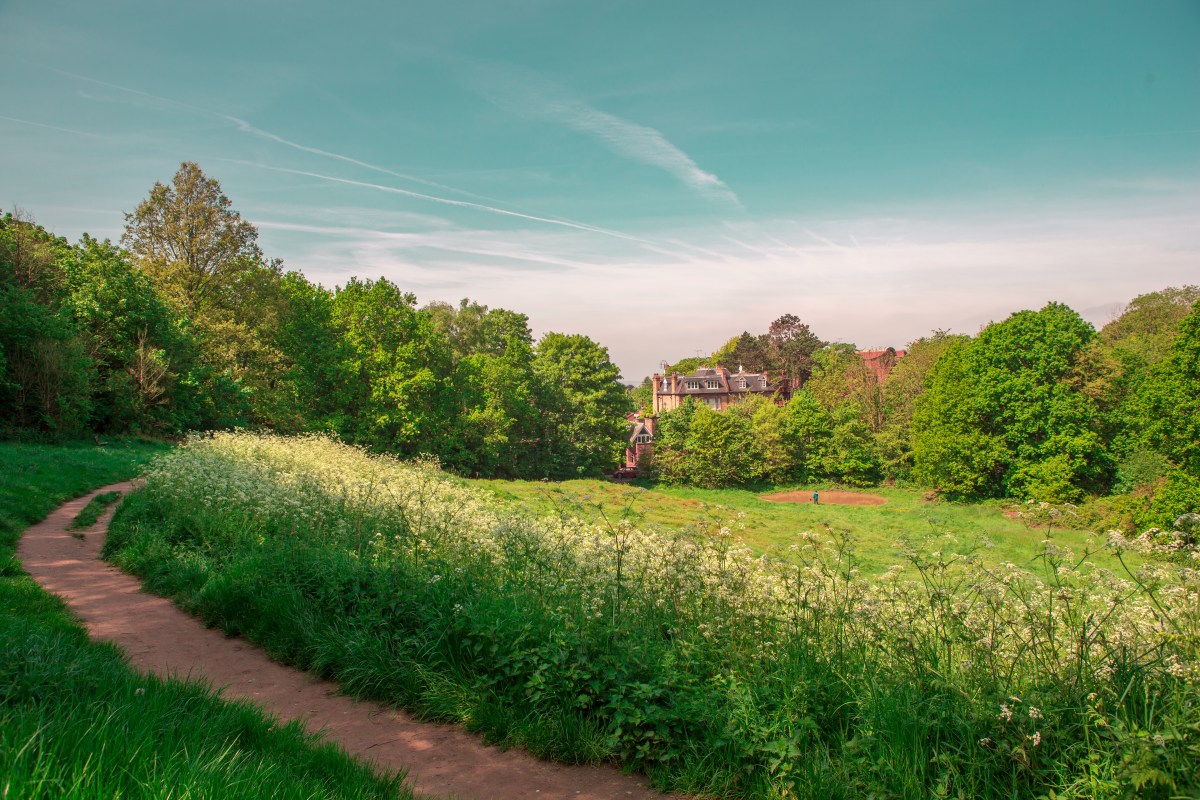
Enjoy an opportunity to walk in Constable’s footsteps as Estelle Lovatt FRSA, art historian, art critic, and professional artists’ mentor, hosts guided walking tours, taking you to where Constable painted his masterpieces in London.
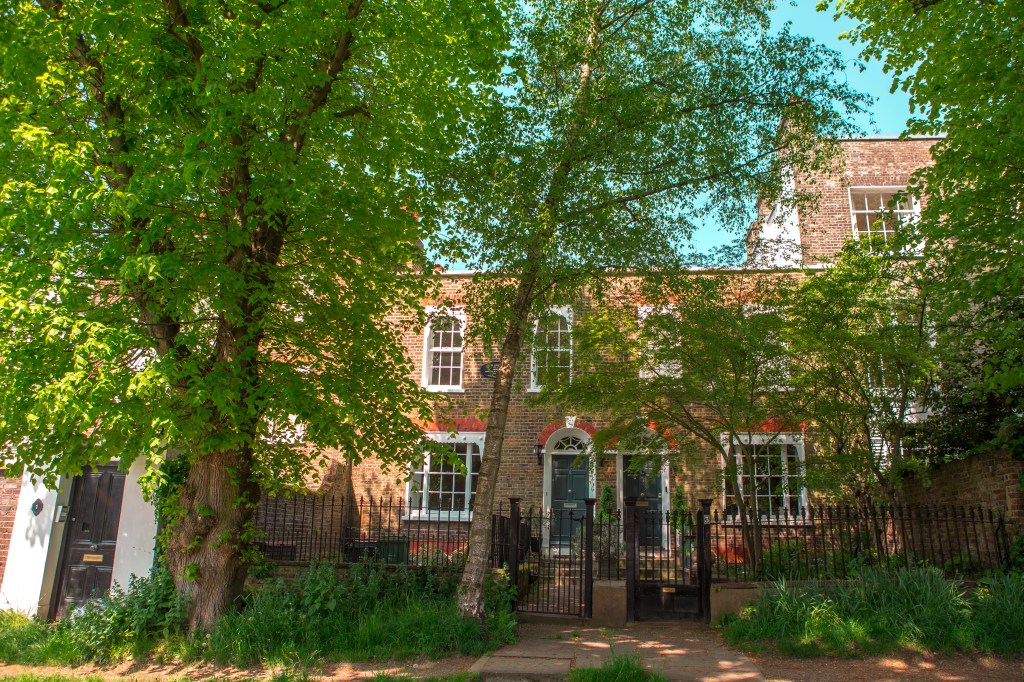
This, is a great complimentary event to the National Gallery’s exhibition, Discover Constable and The Hay Wain, as Estelle follows the great Romantic painter’s late life, to see where he lived, painted, sketched, worked and loved in Hampstead, London NW3.
The walks take place throughout the year. Details and tickets are available on Estelle’s Eventbrite page, Walk Constable’s Hampstead,
Constable painted his masterpiece, The Hay Wain, from drawings and studies he’d sketched over at least a twenty year period, en plein air, in Suffolk. But even after his move, from here to London, when he studied at the Royal Academy, Constable often returned to the landscape of his youth to sketch his beloved countryside. Capturing and documenting the fleeting momentary weather effects pass amidst transitory effects of daylight, all naturally occurring.
He finished The Hay Wain in his London studio – the backyard shed in the garden of his Hampstead, London NW3, home.
This magnificent “six footer” painting was exhibited at the Royal Academy, the same year it was painted, in 1821. Géricault and Delacroix admired it and, although it was quite favourably welcomed by critics saying, it ”approaches nearer to the actual look of rural nature than any modern landscape whatever”, it failed to sell.
The popularity of Constable’s work
Constable’s pictures – exceedingly popular today – were not well received in his lifetime, here, in England. But he inspired contemporary French artists from the Barbizon School and Romantic movement. As he gained significant success in France, The Hay Wain got phenomenal approval and praise when it was exhibited at the Paris Salon, and received a gold medal from the King of France, in 1824.
Nowadays, it’s considered a very lovely, traditional, image of the verdant pastoral English countryside. Even Banksy has interpreted it!
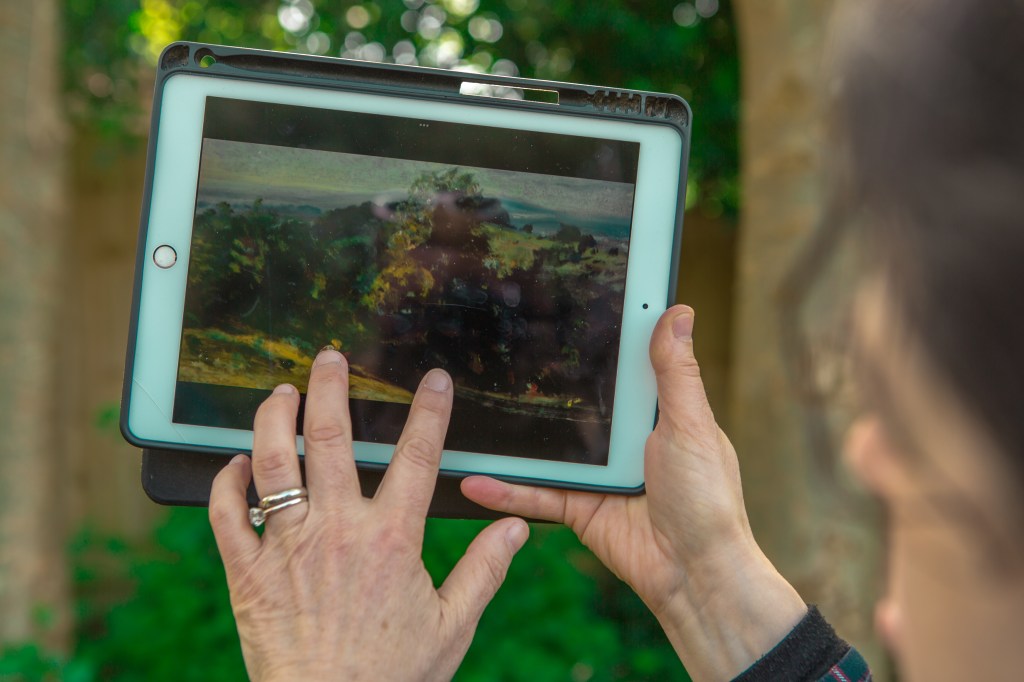
Evoking the calm rustle of being outdoors in nature by Willy Lott’s farmhouse along the River Stour, Constable developed full-sized oil paint sketches to enable him to resolve the pictorial composition.
His sketched studies, alla prima, are much admired. However, early 19th-century gallery-goers found them far too slapdash, radically expressionistic and unfathomably impressionistic, in interpreting the landscape. Today, we value these studies on paper as fascinating and insightful, pre-empting the artist’s working practice. And if Constable felt like it, he’d have no problem adding an invented rainbow – or two, designing elm trees taller than fact, or superficially brightening a horse’s red harness or boy’s waistcoat to best complement the star, principal colour, green.
The scene is about a mile from where Constable was born and spent his childhood, in East Bergholt. The place where, as Constable sympathetically wrote, he valued “The sound of water escaping from Mill dams, elms and willows, old rotten banks, slimy posts & brickwork. I love such things.”
‘Constable’s Hampstead’ Walk & Talk Tour with art historian and art critic Estelle Lovatt FRSA.
Walk in Constable’s footsteps to see where he lived, worked and painted his great iconic landscape masterpieces on the Heath, Hampstead, and around the NW3 London village, finishing at his family tomb in the church.
Estelle speaks to you, describing the story of Constable’s life, his parents, family, wife and children. His dislike of Turner and relationship with the Royal Academy. Painting ‘en plein air’ and ‘alla prima’, British Romanticism, Dutch Golden Age influences, inspiring future French Impressionism. Bringing alive everything you wanted to know about Constable, and how he painted nature, the best clouds, rays of sunshine & double rainbows in art history.
And if you want to draw where Constable sketched, bring your sketch pad and pencil!
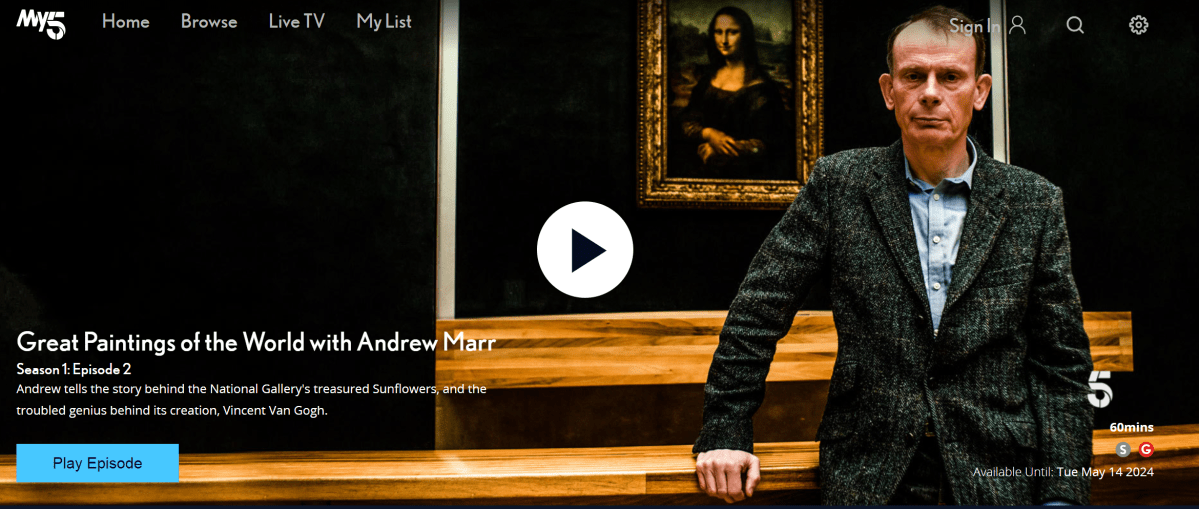
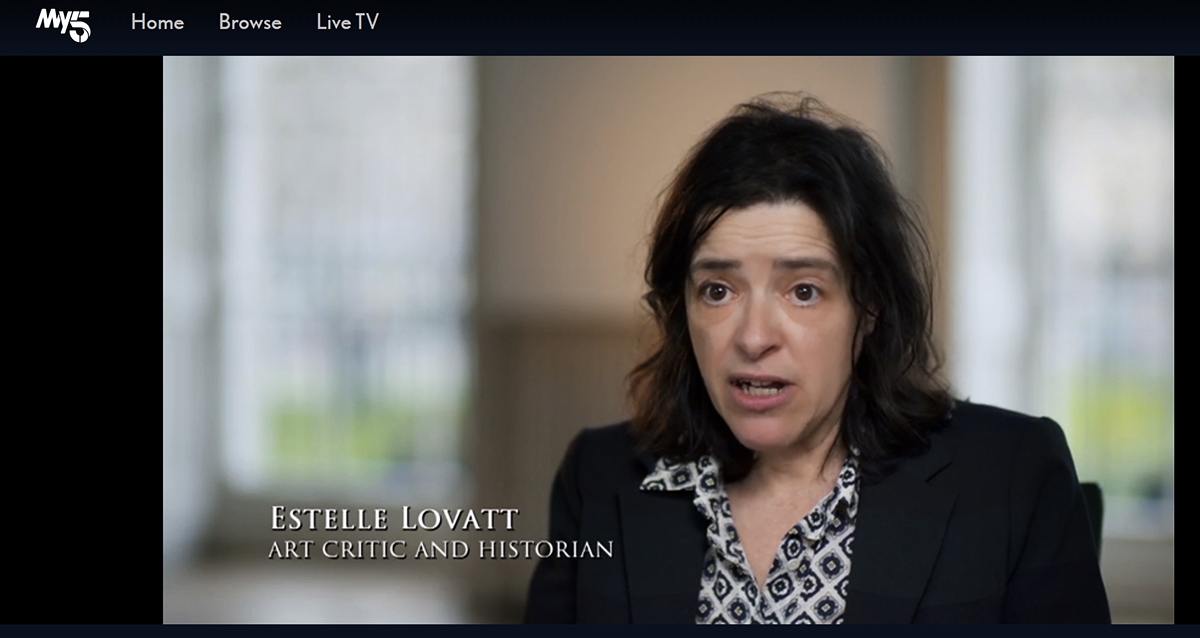
Andrew Marr tells the stories behind ten of the greatest paintings ever and I’m delighted to be one of the expert contributors giving my take on artists, art history and art throughout the 10 episodes. Watch here.
I helped trace the stories of each of these paintings – from the biography of the artist, the historical context of the painting, throughout to what became of the artist and the painting.
1 – Mona Lisa by Leonardo da Vinci, Louvre, Paris
2 – Sunflowers by Vincent van Gogh, National Gallery, London
3 – The Fighting Temeraire by Turner, National Gallery, London
4 – Weeping Woman by Pablo Picasso, Tate Britain, London
5 – The Water Lilies by Monet, Musée de l’Orangerie, Paris
6 – Hay Wain by Constable, National Gallery, London
7 – Rokeby Venus by Velázquez, National Gallery, London
8 – Night Watch by Rembrandt, Rijksmuseum, Amsterdam
9 – Ophelia by Millais, Tate Britain, London
10 – Birth of Venus by Botticelli , National Gallery, London
‘If you have one art experience a month, your life is extended by ten years.’ Art Critic Estelle Lovatt explores how artists through the ages have captured the spirit of Easter.
A treasured Banksy painting could raise up $6.3 million at auction
A rare Banksy painting with a sharp environmental message is set to go under the hammer at Sotheby’s in London. Crude Oil (Vettriano), a reworking of Jack Vettriano’s The Singing Butler, is expected to fetch up to $6.3 million at auction. (AP Video: Mustakim Hasnath)Published 5:31 PM BST, February 26, 2025











 Estelle Lovatt