
Winston Churchill: The Painter At The Wallace Collection

Winston Churchill: The Painter In a happy place – Sir Winston Churchill painting in Belgium, September 1946 (colorized) ©CHURCHILL ARCHIVES CENTRE

Offering fresh insights into another side of the Prime Minister, including artistic connections with two US Presidents, this will profusely elate your mood

The Wallace Collection, Hertford House, Manchester Square, London W1U 3BN, until November 29, 2026

www.wallacecollection.org

By Estelle Lovatt |

In Britain, and across the Atlantic in the United States of America, Sir Winston Churchill (1874–1965) was hugely respected as British Prime Minister of the UK during World War II, and then again from 1951-55. But many people don’t know that he was a prolific and talented artist.

The last major retrospective of his paintings was held in 1958, and it was organized with the support of US President Dwight Eisenhower and Hallmark founder JC Hall. The exhibition toured North America, continuing on a wider international tour to New Zealand and Australia.

Churchill had famously persuaded US President Roosevelt to accompany him to Marrakech in 1943, where he painted the mountainous landscape and mosque from his hotel. The artwork (below), which he painted for Roosevelt, was the only painting he made during the World War II.

Churchill turned to painting for several very personal reasons. He began painting in 1915 as a comforting private source of escape in the aftermath of the First World War. It provided a reflective refuge from the pressures of public life. The creative act soon became a lifelong discipline that he pursued whenever and wherever he traveled. From wartime Britain through the English countryside to southern Europe to France, Italy, and Marrakech, capturing coastal towns, harbors and villas. Through rich color, energetic brushwork, and textured surfaces, Churchill developed his own bold visual language.

From tentative early works to more assured late paintings, Churchill showed a surprising range as an artist, his subjects including: somber wartime scenes; Mediterranean harbors; still-lifes with silverware reflecting bottles and ceramics; Moroccan cityscapes (some of which he presented as diplomatic gifts); portraits; front-line ‘war pictures’ made in Belgium; Chartwell (his home for over forty years, later acquired by the National Trust and now open to the public); and the gardens and interiors of friends’ English country houses. His paintings reveal the pleasure he took in capturing everything that took his eye, be that dazzling blue skies, vivid green foliage, crisp white snow or warm pink radiating sunsets.

Churchill, the fine artist, emerges as a striking contrast to Churchill the statesman and public leader we know. Drawing inspiration from his contemporary artists, he developed his own artistic practice. That it was at his easel that he found most peace, inner strength and renewal, paintbrush in hand, is clear.

As a result, the President of the Royal Academy, Sir Alfred Munnings, invited Churchill to submit paintings for the annual Summer Exhibition, in 1947. Churchill entered two works in the ‘outsider’ category under the pseudonym David Winter. Once his identity became known, he was celebrated as the first Prime Minister to exhibit at the Royal Academy. The following year was elected an Honorary Academician Extraordinary in recognition of his ‘eminent services to our Realm and People’ and his ‘achievements in the Art of Painting’. This distinction entitled him to continue exhibiting at the Summer Exhibition, which he continued to do until 1951.

The Wallace Collection’s major retrospective of Churchill’s paintings is the first substantial exhibition of his art in the UK since his death. It features more than 50 works, around half from private collections, rarely seen in public before. The exhibition includes a small group of works by his artist mentors and friends, including the Irish artist Sir John Lavery (Lavery’s wife Hazel, an American, also taught art to the budding Churchill) and Sir William Nicholson whom Churchill called “Cher Maître”. Walter Sickert, in particular, also encouraged Churchill as an amateur to experiment with technique and refine his craft.

Offering magnificent fresh insights into Churchill, the public figure known globally for his politics, being sustained by his lifelong passion for painting, this is a choice 5-star must-see. It will profusely elate your mood.Published on May 19, 2026


Winston Churchill: The Painter Sir Winston Churchill, The Tower of the Koutoubia Mosque, 1943 PRIVATE COLLECTION. © CHURCHILL HERITAGE LTD. IMAGE COURTESY CHURCHILL HERITAGE LTD

Source: https://www.theamerican.co.uk/pr/rev-art-Churchill-The-Painter_The-Wallace-Collection

February ART AND ARCHITECTURE ARTICLES AND MORE FROM MEMBERS OF THE CRITICS’ CIRCLE

In this post, we summarise all the articles by the Critics’ Circle members on art and architecture during February 2026.

Sue Hubbard has reviewed Rose Wylie Memories Relived and Shared at the Royal Academy and Tracey Emin A Mature Voice Emerges at Tate Modern, both for Artlyst.

Tabish Khan has previewed the top exhibitions to see in March for Londonist. For his newsletter Londonist Urban Palette, he has interviewed Iain Chamberlain, asked can video play nicely with other artworks? He has also uncovered the secrets of the Painted Hall in Greenwich, and asks should we save objects and artworks for the nation? For FAD magazine, he has his weekly top 5 art exhibitions and has covered Light Up Berwick. As co-host of the podcast The Good, The Bad and The Arty, he discusses preserving craft and heritage in the Middle East and beyond, as well as Art and Community at Two Temple Place.

Rachel Kubrick reports that an exhibition of Black artists reinterpreting the US flag opens without key Dread Scott work, and Club for working-class art professionals expands from London to northern England, both for The Art Newspaper.

Estelle Lovatt has spoken to AP News on the following occasions: Tracey Emin at Tate Modernhow artists brought love into their workSeurat at The Courtauld, and Lucien Freud at the National Portrait Gallery.

Maev Kennedy reports that an Opulent golden slipper, believed to have belonged to England’s King James II, goes on display in UK, and that Gwen John—the quiet ‘seer of strange beauties’—gets major show in Wales, both for The Art Newspaper.

Lead image is of Tracey Emin’s exhibition at Tate Modern. Photo © Tate (Jai Monaghan)

James McNeill Whistler At Tate Britain | The American

Whistler, Nocturne James McNeill Whistler, Nocturne, c. 1870-76, on a rare loan from the White House Collection PHOTO ©TATE (LARINA FERNANDES)

The largest European retrospective for 30 years of the American painter shows his development and his major influence on the art world

Tate Britain, Millbank, London SW1P 4RG

www.tate.org.uk

By Estelle Lovatt | Published on March 19, 2026


James McNeill Whistler, 1834-1903, was an extraordinary American artist, primarily based in the UK. He was born in Lowell, Massachusetts, USA and died in London, England.

As the founder of ‘Tonalism’, in the 1880s, Whistler painted the atmospheric tone and quiet intimacy that we associate the artist with in his reflective canvases. His painterly approach went on to influence the American abstract, stain-and-spray, Color Field painters in New York, during the 1940s and ‘50s, increasingly making abstract expressionism the subject, in itself.

This is the largest Whistler retrospective in Europe for 30 years, featuring 150 artworks that show the full breadth of his painting, drawing, printmaking and design. Don’t underestimate his widespread, major, contribution to the art world. From his iconic Portrait of the Artist’s Mother to his celebrated Nocturnes, the exhibition spans Whistler’s most famous, and infamous, works.

Arrangement in Black and Grey, No. 1 (known as Portrait of the Painter’s Mother and popularly as Whistler’s Mother) is on display at Tate Britain for the first time in 20 years, making its return to the city where it was painted in 1871. Whistler’s 66-year-old mother sat for her portrait after another model failed to arrive. This huge painting has since become an enduring symbol of motherhood, strength and resilience. (And, do you remember this great picture featuring in the comedic Mr Bean film of 1977, Bean: The Ultimate Disaster Movie?)

This exhibition also includes four previously unseen pocket sketchbooks, on display for the first time. Whistler carried them with him on his travels, to always sketch, draw and capture those fleeting moments of daily life he encountered, across many, many, countries. These small, intimate volumes, though never intended for public view, reveal his constant urge to record what he saw. As he said, “No day without a line”. They include scenes from his travels in the USA, Britain, Europe, Chile and Algeria, as well as a self-portrait made, at age 11, in St Petersburg, Russia.

Whistler was a fashionable, cosmopolitan, celebrity who challenged Victorian society time and time again with his bold, experimental and increasingly defiant approach to artistic innovation. Whistler anticipated modern art in his pursuit for truth and beauty as his artwork became more atmospheric, and increasingly more abstract. Shaped by his subtle, controlled, handling of oil paint, he wasn’t constrained by his palette, but was instead freed by the liberties he took with the slick, transparent medium. Tackling everything. Fearing nothing.

After moving to Paris aged 21, Whistler engaged with his contemporary artists, including Degas. Developing an interest in working-class subjects and urban spaces, he helped pioneer and establish Impressionist techniques and took to painting landscapes, en plein air, outside, on the French coast, through to Battersea and Chelsea and along the industrial River Thames in central London.

And in Britain, Whistler transformed nighttime scenes, of factories and ‘pleasure gardens’ along the Thames, lit by streetlamps and fireworks, into timeless, atmospheric paintings. He advocated a new minimalist style, arguing that “nature is very rarely right”, and believed that artists should create their own harmony of color and line.

Whistler, Head of a Peasant Woman James McNeill Whistler, Head of a Peasant Woman, 1855 ©HUNTERIAN MUSEUM, UNIVERSITY OF GLASGOW

This now is where we witness the bringing together the largest display of Whistler’s Nocturnes ever assembled. Wow!! Yes, I’d say, it’s a wower!! From the first, painted in Valparaiso, Chile, to the last, painted in Venice. As Whistler said, it was as if they were painted “like breath on glass”. So delicate, mysterious and enigmatic. Among them is Nocturne, c. 1870-76, on rare loan from the White House Collection. It was originally gifted to President John F Kennedy in 1962, and has not left Washington, DC since. Until now, under President Donald Trump. Don’t miss your chance to see it and other magnificent masterpieces.

Another must-see is, Nocturne: Black and Gold – The Falling Rocket, c. 1875. It captures fireworks at night, and sparked a fierce debate among artists, patrons and critics and a famous court case between Whistler and the leading Victorian critic John Ruskin.

It was after seeing this abstract canvas, that Ruskin wrote that the artist was, simply, “flinging a pot of paint in the public’s face”…and showing “cockney impudence” by asking 200 guineas for it! In the trial, 1878, Whistler sued Ruskin for libel. At the Old Bailey, the artist was asked, how he could charge so much for a painting completed in two days? He replied that he was charging not for two days’ labor, but for “the knowledge of a lifetime!”.

Whistler won his case, but received only a farthing (a quarter of a penny) in damages. The legal costs bankrupted him, though the case secured his place in how he changed the course of modern art history. This feud, and its legacy, is seen as one of the earliest and most defining battles of Modernism, exposing the clash between detailed Victorian Realism and Whistler’s “art for art’s sake” vision of Expressionism and Abstraction.

Now, for the first time in 120 years, Whistler’s early oil portraits are reunited, unseen together since his memorial exhibition in 1905. The attribution of Head of a Peasant Woman (1855; Hunterian Museum, Glasgow) was once uncertain, but now, with new research and conservation it’s duly confirmed as an artwork by Whistler, painted in Paris, in his early twenties. It is therefore his oldest surviving finished oil portrait. It hangs aside his striking full-length portraits, which were repeatedly rubbed back and reworked until they became almost ghostlike. See the enigmatic Portrait of Lady Archibald Campbell (1883) and the Rembrandt-inspired Gold and Brown: Self-Portrait c. 1896–98.

The elegant Butterfly Cabinet, 1877 reflects Whistler’s bold approach to interior design, most notably seen in Harmony in Blue and Gold: The Peacock Room, 1877 (Freer Gallery of Art, Washington). And you can see Whistler’s personal collection of East Asian ceramics, Japanese prints and artist-designed furniture, alongside his easel, palette and brushes.

Whistler’s Finish: Research and Conservation Project, supported by The Lunder Foundation, is a year-long collaboration between Tate, the Colby College Museum of Art and the Hunterian Art Gallery, shedding new light on his methods and techniques.

With Tate offering us this fresh view of how Whistler made his astonishing paintings, this exhibition is particularly eye-catching, entrancing and fearless.

Must-see, 10/10.

Whistler, Arrangement in Black and Grey, No. 1

Source: https://www.theamerican.co.uk/pr/rev-art-James-McNeill-Whistler-At-Tate-Britain

Discover Constable & The Hay Wain | Painters Online

New exhibition at the National Gallery plus Walk Constable’s Hampstead with art historian Estelle Lovatt.


As part of the National Gallery’s Bicentenary celebrations, Discover Constable & The Hay Wain, 17 October to 2 February, 2025, will focuss on and explore John Constable’s lush green masterpiece, The Hay Wain, painted in 1821.

This exhibition will look at how the great Romantic Realist artist’s perspective of the English landscape reformed itself from social, political and physical assessment and how much the Old Masters were a huge influence from Michelangelo to RuisdaelRubensvan Goyen and Claude. Artworks by William BlakeGeorge Morland and John Linnell will also be included.

The exhibition

  • National Gallery, London, Sunley Room
  • 17 October 2024 – 2 February 2025
  • Admission free

Walk in Constable’s footsteps with Estelle Lovatt

Enjoy an opportunity to walk in Constable’s footsteps as Estelle Lovatt FRSA, art historian, art critic, and professional artists’ mentor, hosts guided walking tours, taking you to where Constable painted his masterpieces in London.

This, is a great complimentary event to the National Gallery’s exhibition, Discover Constable and The Hay Wain, as Estelle follows the great Romantic painter’s late life, to see where he lived, painted, sketched, worked and loved in Hampstead, London NW3. 

The walks take place throughout the year. Details and tickets are available on Estelle’s Eventbrite page, Walk Constable’s Hampstead,

CLICK HERE FOR DETAILS AND TO BOOK


Painting The Hay Wain

Constable painted his masterpiece, The Hay Wain, from drawings and studies he’d sketched over at least a twenty year period, en plein air, in Suffolk.  But even after his move, from here to London, when he studied at the Royal Academy, Constable often returned to the landscape of his youth to sketch his beloved countryside. Capturing and documenting the fleeting momentary weather effects pass amidst transitory effects of daylight, all naturally occurring.

He finished The Hay Wain in his London studio – the backyard shed in the garden of his Hampstead, London NW3, home.

This magnificent “six footer” painting was exhibited at the Royal Academy, the same year it was painted, in 1821. Géricault and Delacroix admired it and, although it was quite favourably welcomed by critics saying, it ”approaches nearer to the actual look of rural nature than any modern landscape whatever”, it failed to sell.

The popularity of Constable’s work

Constable’s pictures – exceedingly popular today – were not well received in his lifetime, here, in England. But he inspired contemporary French artists from the Barbizon School and Romantic movement. As he gained significant success in France, The Hay Wain got phenomenal approval and praise when it was exhibited at the Paris Salon, and received a gold medal from the King of France, in 1824.

Nowadays, it’s considered a very lovely, traditional, image of the verdant pastoral English countryside. Even Banksy has interpreted it!

Evoking the calm rustle of being outdoors in nature by Willy Lott’s farmhouse along the River Stour, Constable developed full-sized oil paint sketches to enable him to resolve the pictorial composition. 

His sketched studies, alla prima, are much admired. However, early 19th-century gallery-goers found them far too slapdash, radically expressionistic and unfathomably impressionistic, in interpreting the landscape. Today, we value these studies on paper as fascinating and insightful, pre-empting the artist’s working practice. And if Constable felt like it, he’d have no problem adding an invented rainbow – or two, designing elm trees taller than fact, or superficially brightening a horse’s red harness or boy’s waistcoat to best complement the star, principal colour, green.

The scene is about a mile from where Constable was born and spent his childhood, in East Bergholt. The place where, as Constable sympathetically wrote, he valued “The sound of water escaping from Mill dams, elms and willows, old rotten banks, slimy posts & brickwork. I love such things.”

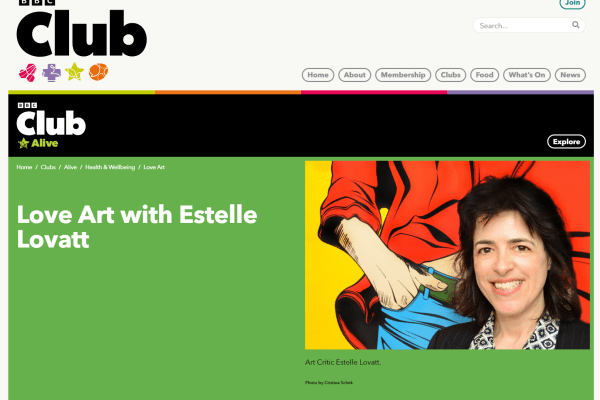
Photos credit: Cristina Schek
Source: https://www.painters-online.co.uk/news/discover-constable-the-hay-wain/