
An icon of the swinging 1960s, Hockney had recently found inspiration in digital art with an iPad.
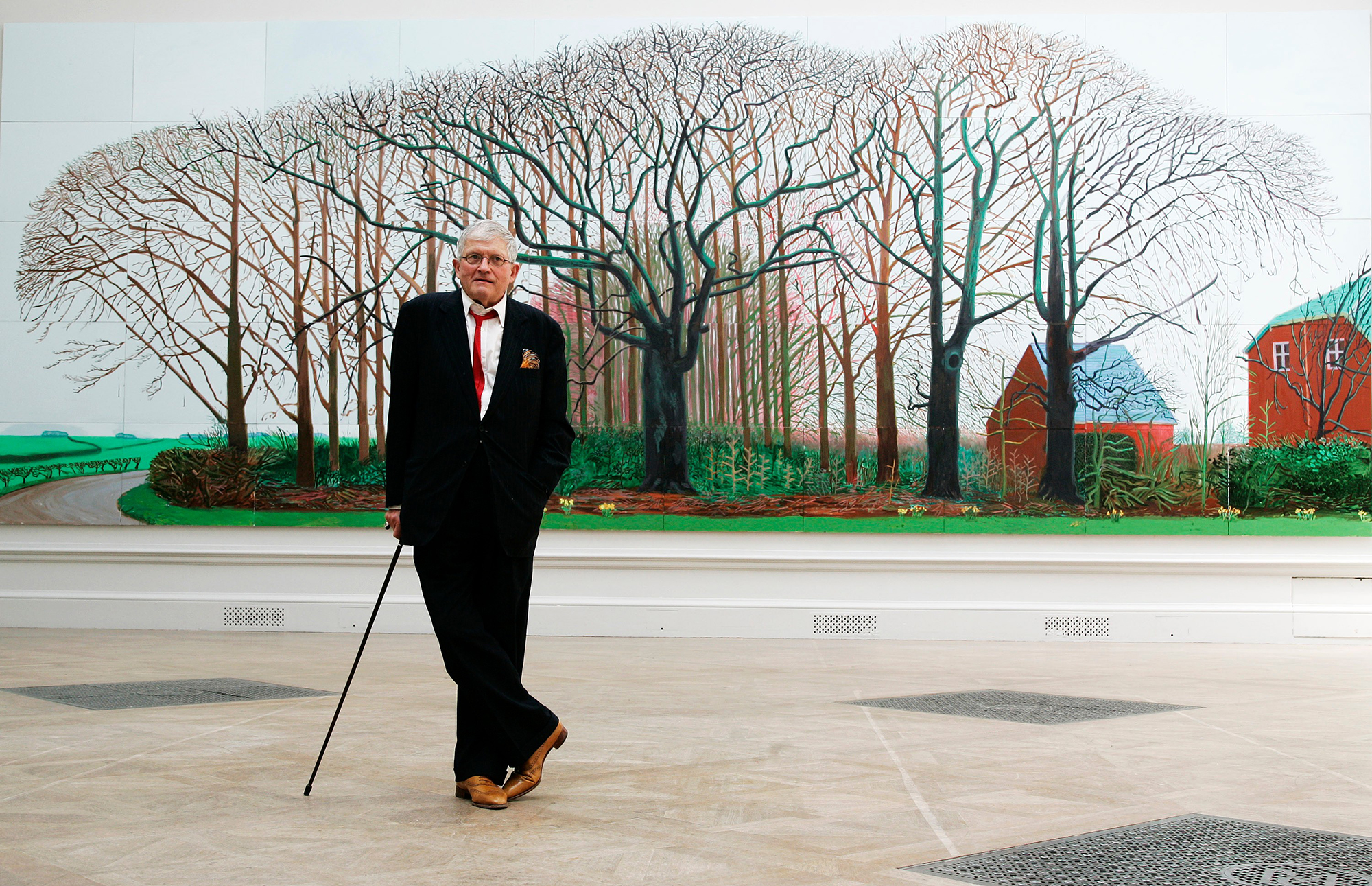
British artist David Hockney poses as he unveils his painting ‘Bigger Trees Near Water’, the largest painting ever shown at the Royal Academy’s Summer Exhibition, London, Friday, May 25, 2007. (AP Photo/Sang Tan)
David Hockney, a treasured British artist whose paintings of shimmering pools and colorful iPad drawings became icons of contemporary art, has died, his publicist said Friday. He was 88.
Over a seven-decade career, Hockney explored and reimagined classical portraiture, landscape painting and pop art, working in painting, collage, photography and digital drawing.
Hockney was born in the north of England but lived much of his life in Southern California, making its sun-drenched suburban views a major motif.
Later in life he returned to Europe, finding renewed inspiration in the wooded hills of his native county of Yorkshire and the fields and trees of France’s Normandy region. One of the most popular and critically lauded British artists of his generation, his works sold for record prices at auction.
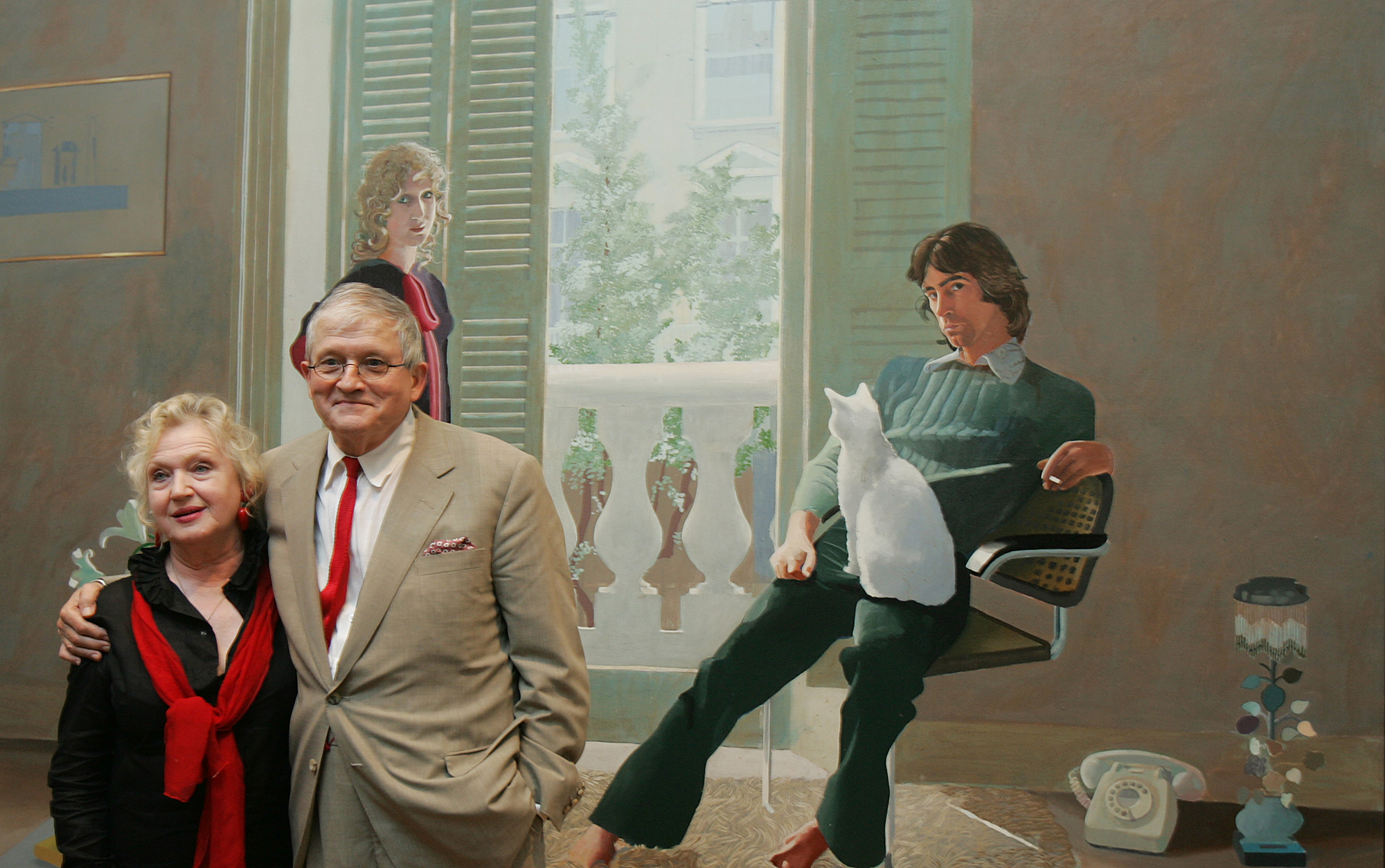
(AP Photo/Alastair Grant)
Historian Simon Schama said it’s no mystery why his work is so enduringly appealing.
“His work is admired — loved is not too strong a word — by the millions who, worldwide, flock to see it because it presupposes an expectation of pleasure,” Schama wrote in an essay accompanying a 2025 Hockney exhibition in Paris.
Hockney’s publicist, Erica Bolton, said he died at his home in London on Thursday, less than a month short of his 89th birthday. She did not give a cause of death.
He is survived by his longtime partner Jean-Pierre Gonçalves de Lima; his great-nephew and studio assistant, Richard Hockney; his brothers Philip and John; and numerous nieces, nephews, great-nieces and great-nephews.
Hockney was an icon of the swinging 60s
With his trademark round glasses and bleached-blond hair, Hockney was a well-known figure in the swinging British and American art scenes of the 1960s, even before he reached the age of 30. His paintings were just as distinctive, many of them creating a dreamlike world of patterned light bouncing off water and windows, and human forms rendered in flattened, simplified shapes in matte acrylic paint.
“I’m excited every day,” he told the Los Angeles Times in 1979. “London has lots of dreary parts but I never find anything dreary in Los Angeles.”
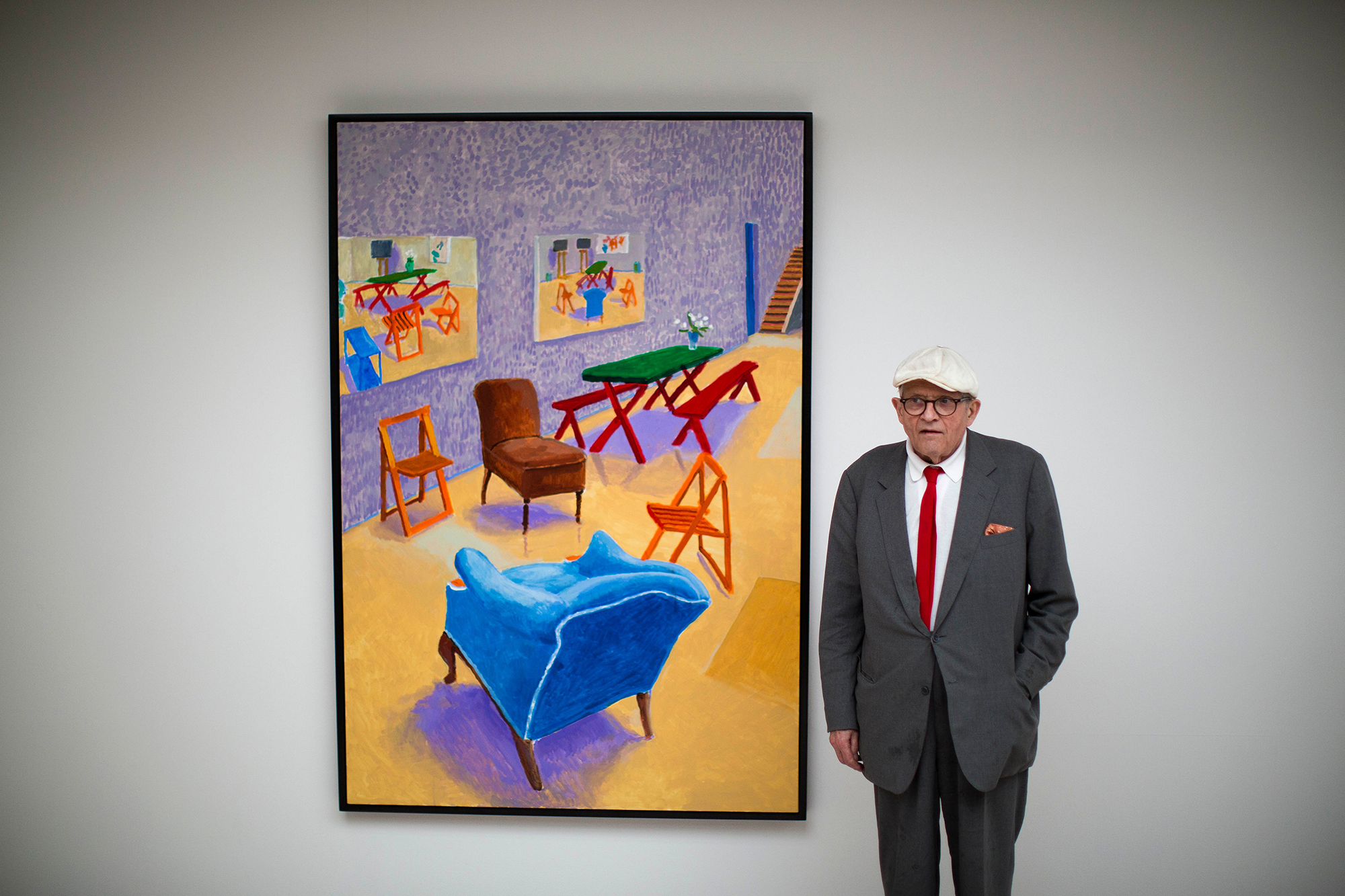
Hockney was born July 9, 1937, in Bradford, a large industrial city whose chief export was woolen textiles. He spent his first two decades there before going to London’s Royal College of Art. He made an impact even before his graduation, and art dealer John Kasmin took him into his stable of artists in 1961.
His artistic influences ranged widely, including Renaissance portraits, 18th-century English artist William Hogarth’s satirical drawings, 19th-century English painter J.M.W. Turner’s landscapes, Pablo Picasso’s experiments in Cubism and 20th-century American pop art.
He shared with other pop artists an interest in the polished surface of modern life. And, like Andy Warhol with his Brillo boxes and Campbell’s soup cans, Hockney occasionally incorporated advertising labels, such as a British Typhoo Tea box used in his 1961 “Tea Painting in an Illusionistic Style.”
He saw success early in his career
He told The New York Times in 1964 that he enjoyed the burgeoning pop art scene in New York but wasn’t sure he was part of it.
“I’m just an ordinary artist,” he said. “I do admire American pop — in fact it seems that everything fresh-looking and vital in England these days has been coming from the U.S.”
Nonetheless, he said in 1995 that he still considered himself “very much an artist in the English tradition.”
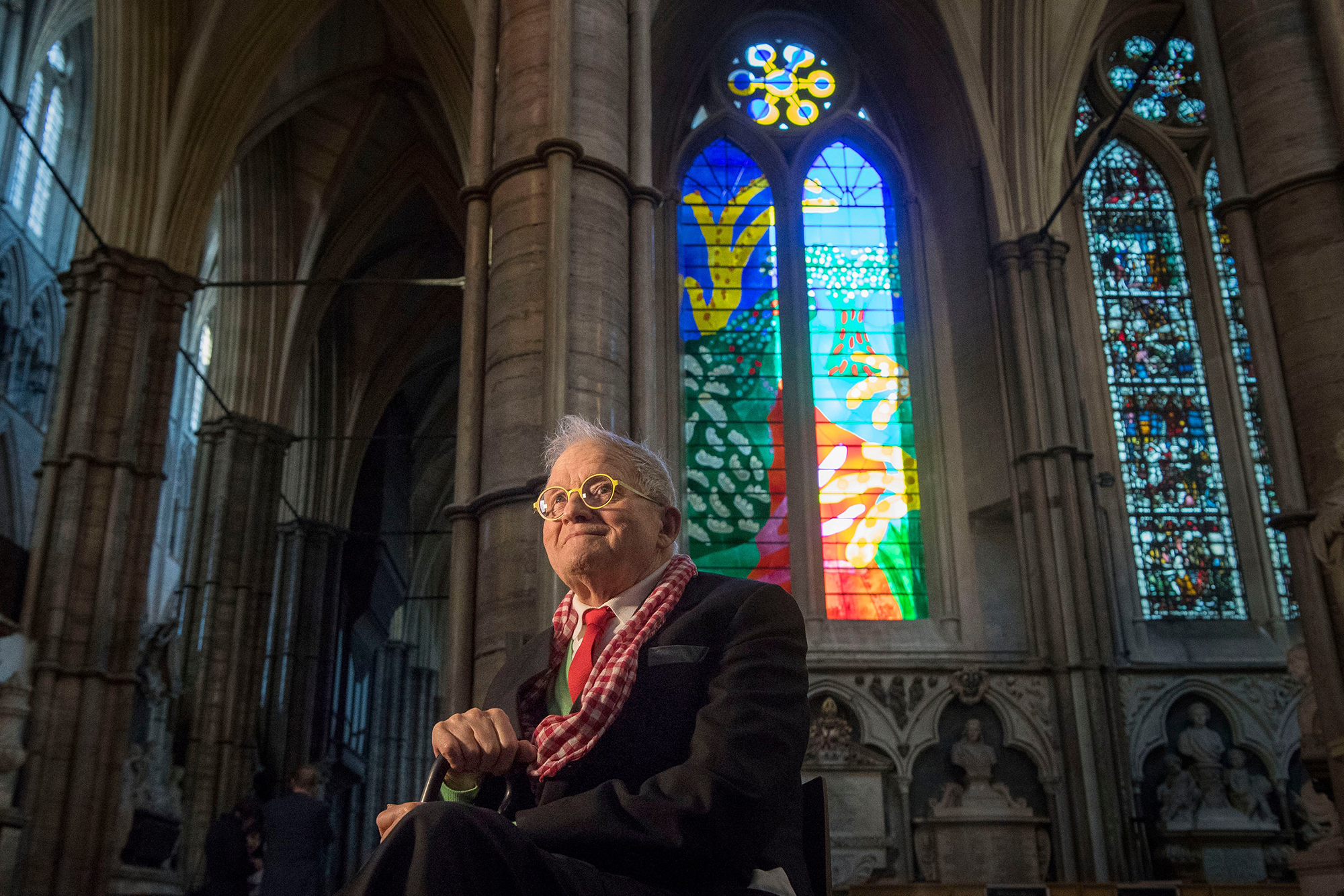
Hockney, who was out as a gay man long before it was common, explored erotic themes, giving youthful male bodies the same tender scrutiny that artists had been giving the female nude for centuries.
Early works like “We Two Boys Together Clinging” and “Two Men in a Shower” celebrated gay relationships when homosexuality was still illegal in Britain.
Early in his career, two of his drawings were bought for the Museum of Modern Art in New York.
“The moment I first sold pictures to earn a living, I felt rich. I’ve been rich ever since,” he told the Associated Press in 1995. “I didn’t have much money but I did what I wanted. … You are a rich man if you do the things you want to do.”David Hockney, Frank Gehry Adopt the Arts at Two East Palo Alto Schools
In 2018, his 1972 painting “Portrait of an Artist (Pool with Two Figures)” sold at a Christie’s auction for $90.3 million, at the time a record for a living artist.
While many of his best-known paintings had American scenes, he also tackled British subjects. He immortalized his parents in several portraits and his friends Ossie Clark and Celia Birtwell in “Mr. and Mrs. Clark and Percy,” a 1971 portrait voted one of Britain’s greatest paintings in a 2005 BBC poll.
Hockney’s work went beyond drawing and painting
Like many traditional artists, he considering drawing a fundamental skill and lamented that it wasn’t taught as rigorously as it used to be.
“Human beings are the most interesting things we see, so they’re the hardest to draw,” he said in a 1996 AP interview.
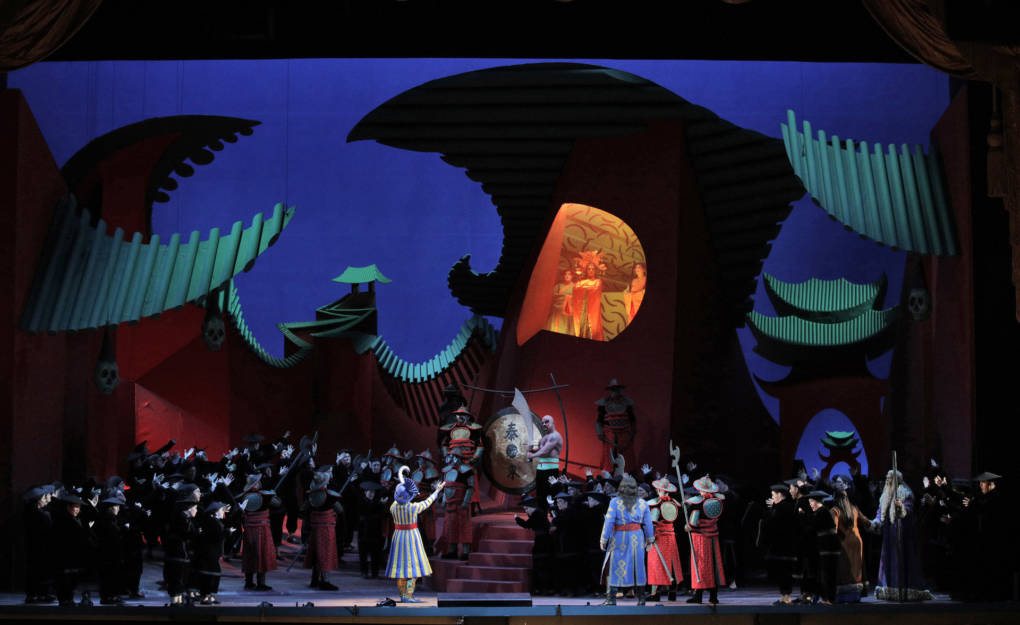
Hockney also embraced other media, including printmaking, photo collage and video. He contributed costume and set designs for the theater and opera, including a celebrated production of Tristan und Isolde first staged in 1987 at the Los Angeles Opera.
When he took up photography, he fused genres, assembling individual photos into elaborate collages like Pearblossom Highway, 11-18th April, 1986, built up of individual views of a desert highway intersection.
“My photographer friends said it was a painting,” Hockney told the AP in 2001. “I said it’s a photograph; I used a camera.”
Source: https://www.kqed.org/arts/13990732/david-hockney-dies-at-88

