David Hockney, iconic British artist known for his colorful landscapes and pool scenes, dies at 88

LONDON (AP) — David Hockney, a treasured British artist whose paintings of shimmering pools and colorful iPad drawings became icons of contemporary art, has died, his publicist said Friday. He was 88.

Over a seven-decade career, Hockney explored and reimagined classical portraiture, landscape painting and pop art, working in painting, collage, photography and digital drawing.

Hockney was born in the north of England but lived much of his life in Southern California, making its sun-drenched suburban views a major motif.

Later in life he returned to Europe, finding renewed inspiration in the wooded hills of his native county of Yorkshire and the fields and trees of France’s Normandy region. One of the most popular and critically lauded British artists of his generation, his works sold for record prices at auction.

Historian Simon Schama said it’s no mystery why the appeal of his work endures.

“His work is admired — loved is not too strong a word — by the millions who, worldwide, flock to see it because it presupposes an expectation of pleasure,” Schama wrote in an essay accompanying a 2025 Hockney exhibition in Paris.

Hockney’s publicist, Erica Bolton, said he died at his home in London on Thursday, less than a month short of his 89th birthday. She did not give a cause of death.

He is survived by his longtime partner, Jean-Pierre Gonçalves de Lima; his great-nephew and studio assistant, Richard Hockney; his brothers Philip and John; and numerous nieces, nephews, great-nieces and great-nephews.

Hockney was an icon of the swinging 60s

With his trademark round glasses and bleached-blond hair, Hockney was a well-known figure in the swinging British and American art scenes of the 1960s, even before he reached the age of 30. His paintings were just as distinctive, many of them creating a dreamlike world of patterned light bouncing off water and windows, and human forms rendered in flattened, simplified shapes in matte acrylic paint.

“I’m excited every day,” he told the Los Angeles Times in 1979. “London has lots of dreary parts, but I never find anything dreary in Los Angeles.”

Hockney was born July 9, 1937, in Bradford, a large industrial city whose chief export was woolen textiles. He spent his first two decades there before going to London’s Royal College of Art. He made an impact even before his graduation, and art dealer John Kasmin took him into his stable of artists in 1961.

His artistic influences ranged widely, including Renaissance portraits, 18th-century English artist William Hogarth’s satirical drawings, 19th-century English painter J.M.W. Turner’s landscapes, Pablo Picasso’s experiments in Cubism and 20th-century American pop art.

He shared with other pop artists an interest in the polished surface of modern life. And, like Andy Warhol with his Brillo boxes and Campbell’s soup cans, Hockney occasionally incorporated advertising labels, such as a British Typhoo Tea box used in his 1961 “Tea Painting in an Illusionistic Style.”

He saw success early in his career

He told The New York Times in 1964 that he enjoyed the burgeoning pop art scene in New York but wasn’t sure he was part of it.

“I’m just an ordinary artist,” he said. “I do admire American pop — in fact it seems that everything fresh-looking and vital in England these days has been coming from the U.S.”

Nonetheless, he said in 1995 that he still considered himself “very much an artist in the English tradition.”

Hockney, who was out as a gay man long before it was common, explored erotic themes, giving youthful male bodies the same tender scrutiny that artists had been giving the female nude for centuries.

Early works like “We Two Boys Together Clinging” and “Two Men in a Shower” celebrated gay relationships when homosexuality was still illegal in Britain.

Early in his career, two of his drawings were bought for the Museum of Modern Art in New York.

“The moment I first sold pictures to earn a living, I felt rich. I’ve been rich ever since,” he told The Associated Press in 1995. “I didn’t have much money, but I did what I wanted. … You are a rich man if you do the things you want to do.”

In 2018, his 1972 painting “Portrait of an Artist (Pool with Two Figures)” sold at a Christie’s auction for $90.3 million, at the time a record for a living artist.

While many of his best-known paintings had American scenes, he also tackled British subjects. He immortalized his parents in several portraits and his friends Ossie Clark and Celia Birtwell in “Mr. and Mrs. Clark and Percy,” a 1971 portrait voted one of Britain’s greatest paintings in a 2005 BBC poll.

Hockney’s work went beyond drawing and painting

Like many traditional artists, he considering drawing a fundamental skill and lamented that it wasn’t taught as rigorously as it used to be.

“Human beings are the most interesting things we see, so they’re the hardest to draw,” he said in a 1996 AP interview.

Hockney also embraced other media, including printmaking, photo collage and video. He contributed costume and set designs for the theater and opera, including a celebrated production of “Tristan und Isolde” first staged in 1987 at the Los Angeles Opera.

When he took up photography, he fused genres, assembling individual photos into elaborate collages like “Pearblossom Highway, 11-18th April, 1986,” built up of individual views of a desert highway intersection.

“My photographer friends said it was a painting,” Hockney told the AP in 2001. “I said it’s a photograph; I used a camera.”

Later he began to draw on iPads, which became his favorite tool.

In the early 2000s, he looked afresh at the fields and forests of Yorkshire in a series of landscape paintings that combined bold color with minute attention to the texture of snow on a hillside or a blossom on a hawthorn hedge. They featured in a 2017 exhibition at Tate Britain in London that was visited by half a million people and moved to the Pompidou Center in Paris and the Metropolitan Museum of Art in New York.

Hockney used the English landscape for inspiration in his design for a stained-glass window installed at Westminster Abbey in 2018 to celebrate the long reign of Queen Elizabeth II.

King Charles III paid tribute to “one of life’s true originals” as he mourned “a man whose irrepressible charm, talent and constant innovation will be most sorely missed, but whose dazzling creativity lives on in galleries and museums around the world.”

He worked right up until his death

In 2019, he moved to Normandy, where during the 2020 coronavirus lockdown he produced joyous iPad drawings of springtime for his friends. His message — “Do remember they can’t cancel the spring” — was emblazoned in neon across the Fondation Louis Vuitton in Paris when it hosted a huge Hockney exhibition that opened in April 2025.

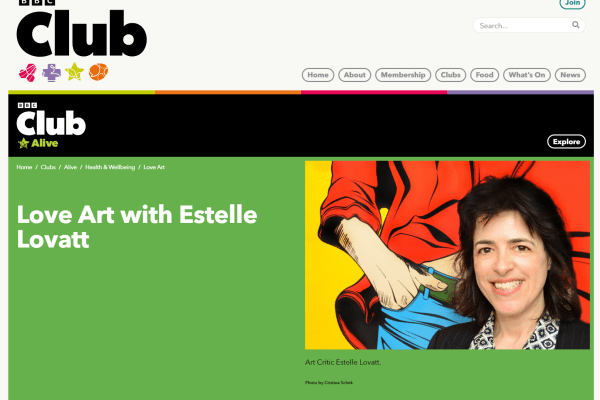
Art critic Estelle Lovatt said Hockney “changed how we see the world.”

“He was one of the first artists to use a fax machine,” she told the AP. “He was one of the first artists to use the Polaroid camera to make collages. He was one of the first artists to use really, really vibrant colors.”

An unrepentant cigarette smoker who railed against government anti-smoking rules, Hockney complained when a poster for the 2025 exhibition was banned from the Paris Metro because it showed him holding a cigarette.

The announcement of his death from his publicist noted that Hockney was “a committed life-long and defiant smoker, expressing the pleasure in life it brought him. … He smoked up to the end.”

Hockney had a minor stroke in 2012 and was increasingly deaf in later years — something he said improved his visual perception.

“If you lose one sense, you gain other senses, and I feel I could see space clearer,” he told the AP in 2017.

He never stopped working.

“It’s my work that keeps me young,” Hockney told the Sun newspaper in 2017. “I’ve been a professional painter for 60 years. Sixty years of getting up every day and doing exactly what I want to do.”

___

Associated Press journalist Mustakim Hasnath contributed to this report.

Source: https://www.tricityrecordnm.com/articles/art-icon-david-hockney-dies-at-age-88/

James McNeill Whistler At Tate Britain | The American

Whistler, Nocturne James McNeill Whistler, Nocturne, c. 1870-76, on a rare loan from the White House Collection PHOTO ©TATE (LARINA FERNANDES)

The largest European retrospective for 30 years of the American painter shows his development and his major influence on the art world

Tate Britain, Millbank, London SW1P 4RG

www.tate.org.uk

By Estelle Lovatt | Published on March 19, 2026


James McNeill Whistler, 1834-1903, was an extraordinary American artist, primarily based in the UK. He was born in Lowell, Massachusetts, USA and died in London, England.

As the founder of ‘Tonalism’, in the 1880s, Whistler painted the atmospheric tone and quiet intimacy that we associate the artist with in his reflective canvases. His painterly approach went on to influence the American abstract, stain-and-spray, Color Field painters in New York, during the 1940s and ‘50s, increasingly making abstract expressionism the subject, in itself.

This is the largest Whistler retrospective in Europe for 30 years, featuring 150 artworks that show the full breadth of his painting, drawing, printmaking and design. Don’t underestimate his widespread, major, contribution to the art world. From his iconic Portrait of the Artist’s Mother to his celebrated Nocturnes, the exhibition spans Whistler’s most famous, and infamous, works.

Arrangement in Black and Grey, No. 1 (known as Portrait of the Painter’s Mother and popularly as Whistler’s Mother) is on display at Tate Britain for the first time in 20 years, making its return to the city where it was painted in 1871. Whistler’s 66-year-old mother sat for her portrait after another model failed to arrive. This huge painting has since become an enduring symbol of motherhood, strength and resilience. (And, do you remember this great picture featuring in the comedic Mr Bean film of 1977, Bean: The Ultimate Disaster Movie?)

This exhibition also includes four previously unseen pocket sketchbooks, on display for the first time. Whistler carried them with him on his travels, to always sketch, draw and capture those fleeting moments of daily life he encountered, across many, many, countries. These small, intimate volumes, though never intended for public view, reveal his constant urge to record what he saw. As he said, “No day without a line”. They include scenes from his travels in the USA, Britain, Europe, Chile and Algeria, as well as a self-portrait made, at age 11, in St Petersburg, Russia.

Whistler was a fashionable, cosmopolitan, celebrity who challenged Victorian society time and time again with his bold, experimental and increasingly defiant approach to artistic innovation. Whistler anticipated modern art in his pursuit for truth and beauty as his artwork became more atmospheric, and increasingly more abstract. Shaped by his subtle, controlled, handling of oil paint, he wasn’t constrained by his palette, but was instead freed by the liberties he took with the slick, transparent medium. Tackling everything. Fearing nothing.

After moving to Paris aged 21, Whistler engaged with his contemporary artists, including Degas. Developing an interest in working-class subjects and urban spaces, he helped pioneer and establish Impressionist techniques and took to painting landscapes, en plein air, outside, on the French coast, through to Battersea and Chelsea and along the industrial River Thames in central London.

And in Britain, Whistler transformed nighttime scenes, of factories and ‘pleasure gardens’ along the Thames, lit by streetlamps and fireworks, into timeless, atmospheric paintings. He advocated a new minimalist style, arguing that “nature is very rarely right”, and believed that artists should create their own harmony of color and line.

Whistler, Head of a Peasant Woman James McNeill Whistler, Head of a Peasant Woman, 1855 ©HUNTERIAN MUSEUM, UNIVERSITY OF GLASGOW
This now is where we witness the bringing together the largest display of Whistler’s Nocturnes ever assembled. Wow!! Yes, I’d say, it’s a wower!! From the first, painted in Valparaiso, Chile, to the last, painted in Venice. As Whistler said, it was as if they were painted “like breath on glass”. So delicate, mysterious and enigmatic. Among them is Nocturne, c. 1870-76, on rare loan from the White House Collection. It was originally gifted to President John F Kennedy in 1962, and has not left Washington, DC since. Until now, under President Donald Trump. Don’t miss your chance to see it and other magnificent masterpieces.

Another must-see is, Nocturne: Black and Gold – The Falling Rocket, c. 1875. It captures fireworks at night, and sparked a fierce debate among artists, patrons and critics and a famous court case between Whistler and the leading Victorian critic John Ruskin.

It was after seeing this abstract canvas, that Ruskin wrote that the artist was, simply, “flinging a pot of paint in the public’s face”…and showing “cockney impudence” by asking 200 guineas for it! In the trial, 1878, Whistler sued Ruskin for libel. At the Old Bailey, the artist was asked, how he could charge so much for a painting completed in two days? He replied that he was charging not for two days’ labor, but for “the knowledge of a lifetime!”.

Whistler won his case, but received only a farthing (a quarter of a penny) in damages. The legal costs bankrupted him, though the case secured his place in how he changed the course of modern art history. This feud, and its legacy, is seen as one of the earliest and most defining battles of Modernism, exposing the clash between detailed Victorian Realism and Whistler’s “art for art’s sake” vision of Expressionism and Abstraction.

Now, for the first time in 120 years, Whistler’s early oil portraits are reunited, unseen together since his memorial exhibition in 1905. The attribution of Head of a Peasant Woman (1855; Hunterian Museum, Glasgow) was once uncertain, but now, with new research and conservation it’s duly confirmed as an artwork by Whistler, painted in Paris, in his early twenties. It is therefore his oldest surviving finished oil portrait. It hangs aside his striking full-length portraits, which were repeatedly rubbed back and reworked until they became almost ghostlike. See the enigmatic Portrait of Lady Archibald Campbell (1883) and the Rembrandt-inspired Gold and Brown: Self-Portrait c. 1896–98.

The elegant Butterfly Cabinet, 1877 reflects Whistler’s bold approach to interior design, most notably seen in Harmony in Blue and Gold: The Peacock Room, 1877 (Freer Gallery of Art, Washington). And you can see Whistler’s personal collection of East Asian ceramics, Japanese prints and artist-designed furniture, alongside his easel, palette and brushes.

Whistler’s Finish: Research and Conservation Project, supported by The Lunder Foundation, is a year-long collaboration between Tate, the Colby College Museum of Art and the Hunterian Art Gallery, shedding new light on his methods and techniques.

With Tate offering us this fresh view of how Whistler made his astonishing paintings, this exhibition is particularly eye-catching, entrancing and fearless.

Must-see, 10/10.

Whistler, Arrangement in Black and Grey, No. 1

Source: https://www.theamerican.co.uk/pr/rev-art-James-McNeill-Whistler-At-Tate-Britain

CNN Ones to Watch’ – Sculpture

screen-shot-2015-03-11-at-15-04-44

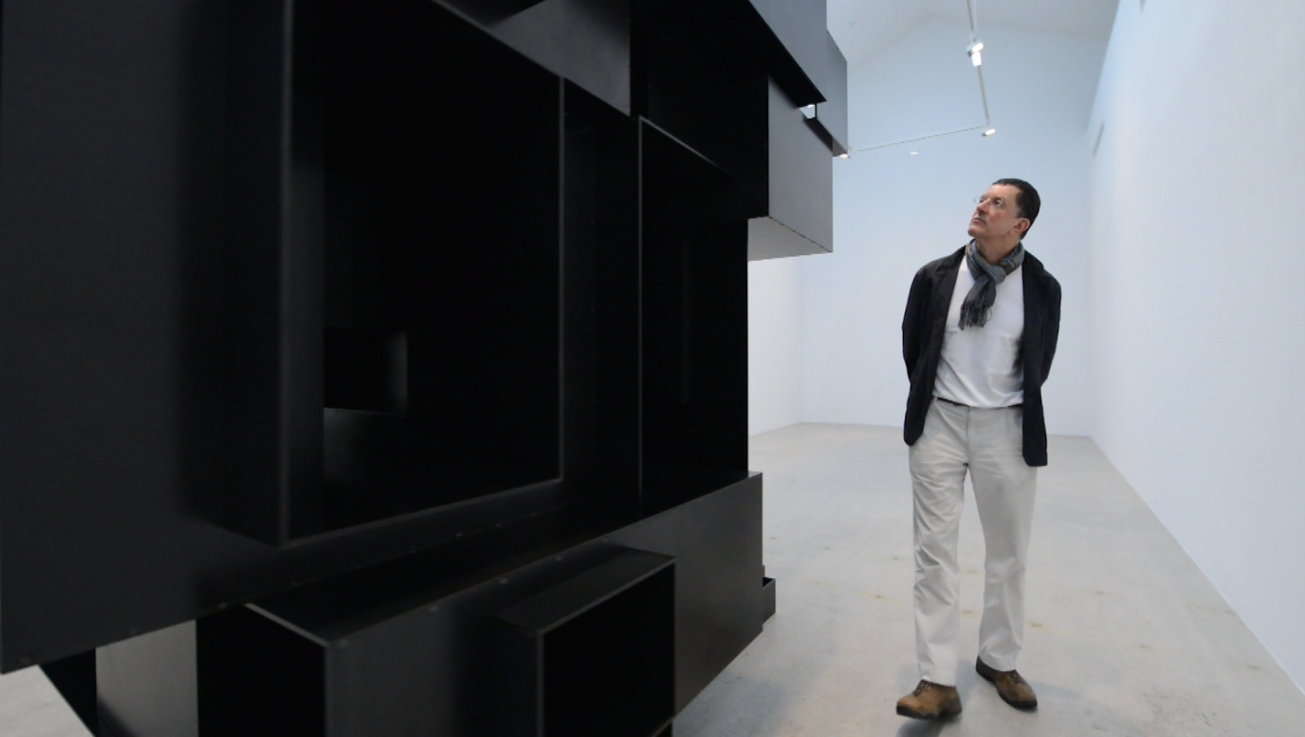
Sculptor Antony Gormley

  • Antony Gormley offers expertise on state of sculpture
  • Tate Modern’s Chris Dercon nominates Mexican, Abraham Cruzvillegas
  • Art critic Estelle Lovatt nominates South African, Jonty Hurwitz

The story of sculpture is carved into the landscape, taking all shapes and sizes, capturing a moment, claiming a space. Once in a while, the work of a great artist takes its place in history. With a range of materials and a forum of ideas more diverse than ever before, where will the next sensational sculptor be found?

‘CNN Ones to Watch’ in March explores this three-dimensional art form to find out which artists have the tools for the top.

One of the best-known sculptors working today, Antony Gormley, shares his thoughts on the state of the art, and the programme has enlisted two prominent voices – director of London’s Tate Modern Chris Dercon, and eminent British art critic Estelle Lovatt, to select their ‘Ones to Watch’.

Antony Gormley has created over two thousand sculptures based on his own body, the greatest of which is arguably the cast iron ‘Angel of the North’ which towers over the landscape and has become a British landmark. His work is exhibited in public spaces around the world, and he has received prestigious international arts awards including the Turner Prize and Japan’s Praemium Imperiale.

From his studio in London, where he’s preparing for a new exhibition in Paris, Second Body, Gormley tells ‘CNN Ones to Watch’: “You don’t get good work without good ideas but the ideas come from the work. Sculpture, of all the arts, is perhaps the most silent and the most filled. Learning to listen to the work that you’ve already made is really where all the core ideas come from. One work is the mother of the next.”

As director of Tate Modern, Belgian Chris Dercon oversees the most visited modern art museum in the world; last year, it welcomed over 5.5 million visitors.

Once a year, Dercon and his team commission a new artist to fill the largest space in Tate Modern, the Turbine Hall, an important platform for emerging sculptors since its opening in 2000. These commissions can catapult an artist to stardom, and have been a seminal moment in the career of many great artists, among them Ai Weiwei and Anish Kapoor.

Dercon has chosen Mexican sculptor Abraham Cruzvillegas to fill the Turbine Hall in October 2015, telling ‘CNN Ones to Watch’ why: “Abraham Cruzvillegas is not shy to take on the vastness of the Turbine Hall and to turn it into something completely else. That’s the magic of these artists that they are capable with sculpture, whether it’s tiny or large sculpture to turn the space into something else. Abraham Cruzvillegas offers you a very open work of art which you have to confront with your own experiences.”

‘CNN Ones to Watch’ travels to Mexico City, where Cruzvillegas’ story begins: “I am not a traditional sculptor carving marble or wood. It’s like testing myself that I can do something with anything. I use my own hair. I use shoes, I use plants, roots, potatoes, shirts, films everything for making sculptures.”

Cruzvillegas took as a reference his own experience of what he calls ‘autoconstruction’, related to the way people build their houses without money (in other countries ‘autoconstruction’ would be called favelas, or shanty towns, slums): “People are responding to their specific needs, so I do the same when I make a sculpture.”

Antony Gormley comments: “I’m interested in Abraham because I see him carrying on the work Orozco and others in Mexico started, which is really dealing with contemporary urban life from the point of nothing, from the street, and doing that in a very intelligent way, a very open way, and celebrating the inherent hope of those that make something from nothing.”

Respected British art critic Estelle Lovatt believes South African sculptor Jonty Hurwitz is   an artist taking the art of sculpture to new extreme, having worked with Hollywood animators and micro-physicists to create the world’s smallest sculpture.

Lovatt tells the show: “I’m very proud to nominate Jonty Hurtwitz as one of the artists to watch because no one works like him today. It’s a mix between the emotional and the intelligent and that’s what gives it the spark.”

‘CNN Ones to Watch’ captures Hurwitz’s figure of a woman who can only be viewed through a microscope, as she dances delicately on a single strand of human hair. His   quest to merge art and science is limitless – he makes vast bronze sculptures using algorithms and mirrors which play with perspectives.

The programme follows Hurwitz in the laboratory at one of the world’s leading universities in engineering and natural sciences, Karlsruhe Institute of Technology in Germany, as the alchemist turned artist crafts a new work.

He tells the programme: “A lot of the artistic expression that I bring to the world represents the absolute current moment in human development, whether it’s 3D printing, whether its technology or whether its science.”

Antony Gormley admires scientific innovation in art: “I think the whole world of nano-engineering is extraordinary because I think it opens up the opposite which is in a sense a limitless spatial potential for art. I think the division between art and science should never have happened. Both science and art need structure, they need discipline, but they also need intuition.”


Via: CNN Press Room, the official website for CNN’s public relations team.

www.cnn.com/onestowatch


It’s the best of British art… but not all is on display

Independent, Estelle Lovatt

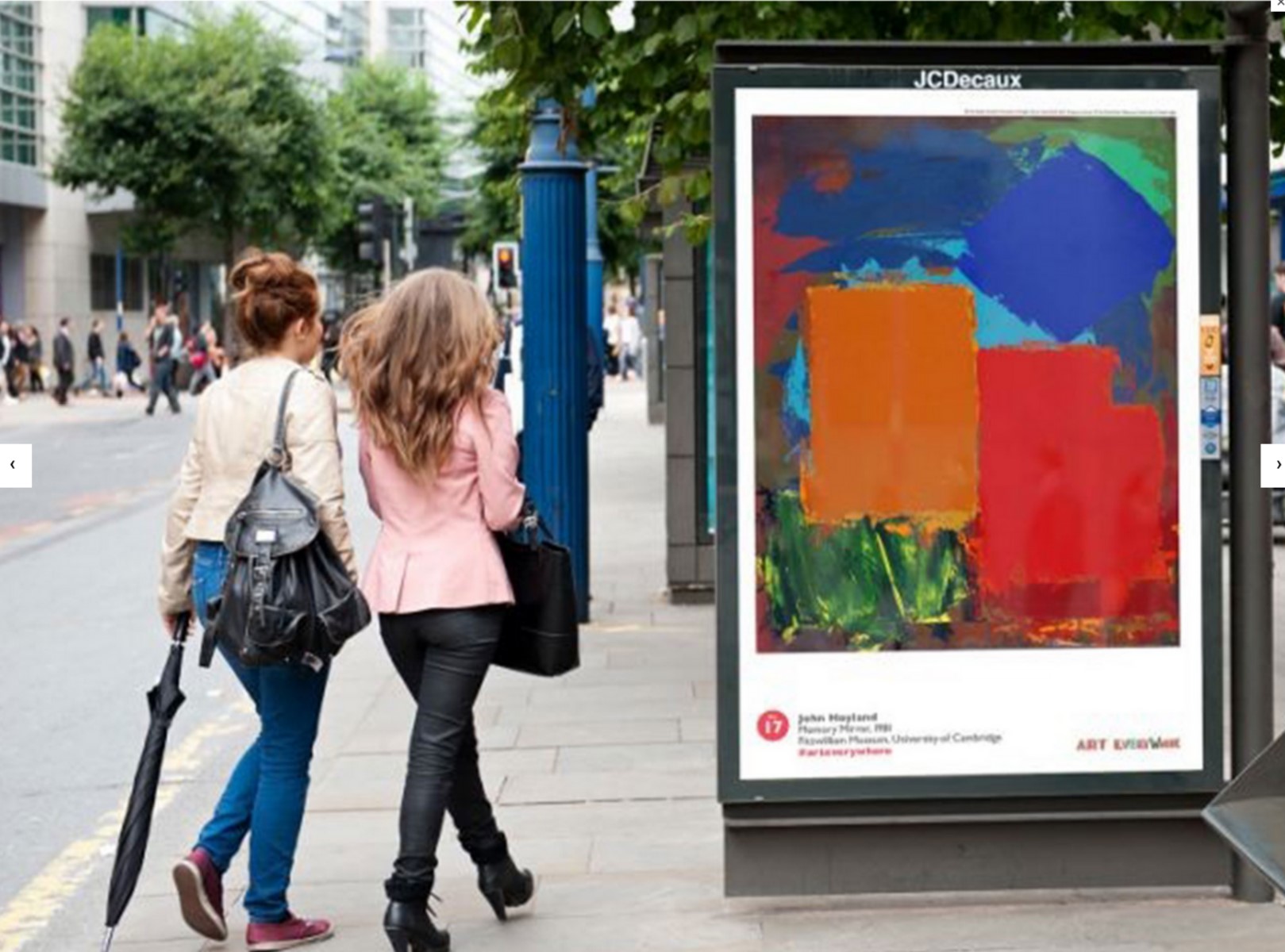
Voted for by the British public, the artworks on Art Everywhere posters may be the only place where they can be seen. Kitty Knowles on why so much remains in storage.

As the best of British art is displayed on posters for all to see for the nationwide exhibition Art Everywhere, nearly half of the original works are tucked away in storage.

Art Everywhere, now in its second year, will plaster 25 artworks, as voted for by the British public, on 30,000 billboards around the UK over the next five weeks – but 11 of these are not currently on public display in galleries.

Art critic and historian David Lee said that it was “typical laziness on the part of the current art establishment” that some works are not available to see.

“Works that are considered to be the core masterpieces of British art should be on display all the time,” said Mr Lee, editor ofJackdaw magazine.

He also warned that the concept of the exhibition may be flawed: “You need to be in the right state of mind for art, and walking down the street is not likely to induce this condition.”

Sarah McCrory, a judge for the 2014 Turner Prize and the director of the Glasgow International art festival, said: “The qualities of a painting can’t be replicated on a billboard print.” But she added that the issue of whether the originals were permanently on display did not matter. “You could spin it the other way and say it’s a nice way to see works that aren’t currently accessible.”

Stephen Deuchar, co-founder of Art Everywhere and director of the Art Fund, which has helped museums and galleries buy works of art for more than a century, defended the exhibition. He said the reproductions should be seen as “meaningful and moving” art objects in their own right.

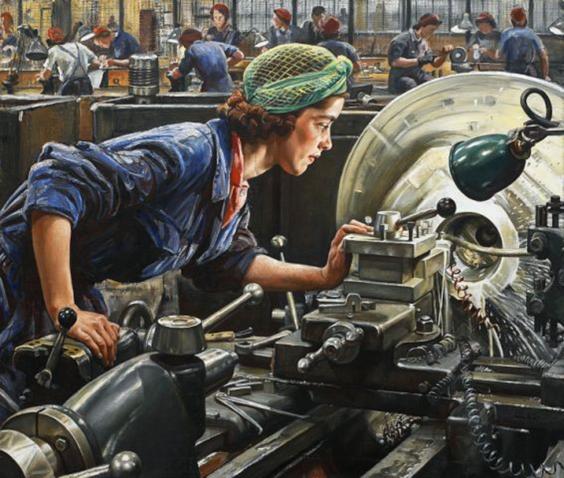
Dame Laura Knight

Dame Laura Knight

“It’s not quite as simple as saying people will see the reproduction and then rush round to the Tate,” he said. “Whether you’re on the high street and you suddenly see a Turner, or you get on a bus and you see a Chris Ofili, it is about having great images beautifully reproduced in an unexpected urban context.”

The vast majority of the longlist was on display when it was selected, he added, insisting that the chosen works are all frequently on display. “I hope that any museum that sees its work on the list that hasn’t shown the work for a while will do so immediately and will hopefully benefit from the revival of public interest in it,” Mr Deuchar added.

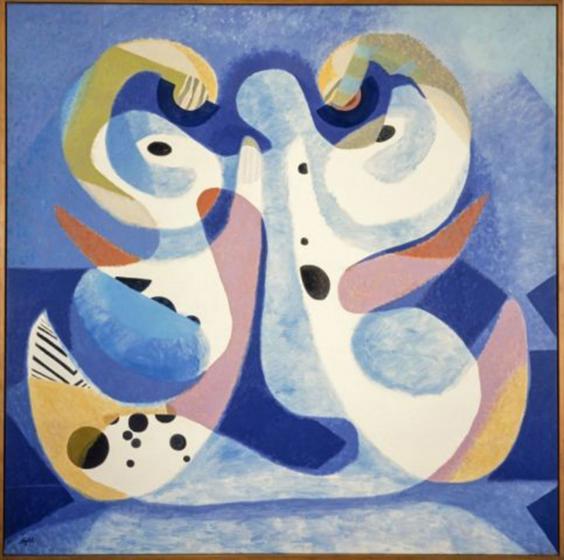
Eileen Agar

 The art critic and BBC Radio 2 presenter Estelle Lovatt voiced support for what she called a “fantastic” project. “What’s important is that people get into the galleries, they’ll see another piece by that artist, or another piece by the school of that artist,” she said. To have art at a bus stop or on a train station platform while we are waiting to start our day is as essential as having porridge and doing our exercises in the morning,” she added. “There is nothing better than five minutes of looking at art to set you up for the day.”

Patrick Caulfield

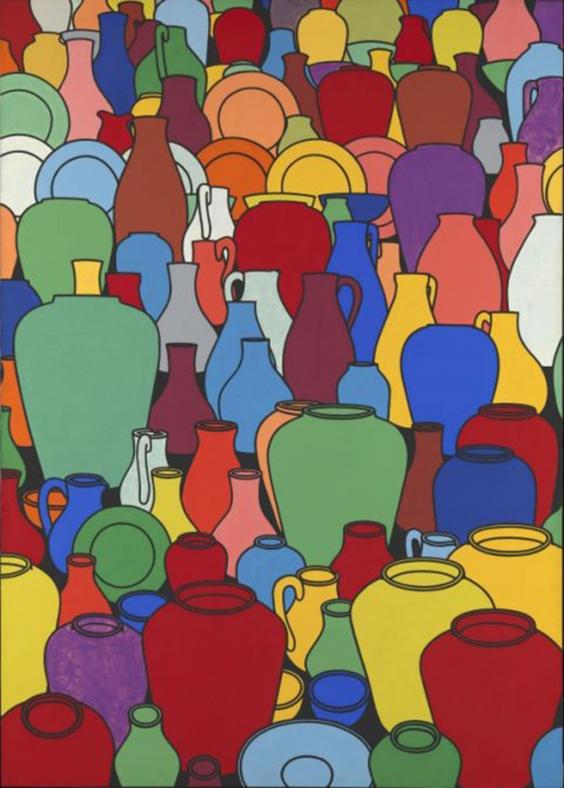
 Patrick Caulfield’s Pottery, Gilbert & George’s Existers and Gillian Wearing’s I’m Desperate are among the works currently stored by the Tate. Other originals in storage include pieces by Eileen Agar, Stanhope Forbes, Rose Wylie and Ben Nicholson. A Julia Margaret Cameron photographic portrait and a William Blake print are currently kept in storage for conservation, but are available to see if visitors call ahead, while works by John Constable, Dame Laura Knight and John Hoyland are due to be displayed in the coming months.

Kitty Knowles The Independent

Can spending millions on art ever be a good investment?

_70396846_bacon-triptych


Consider the idea of spending $142m (£89m, 106m euros) on a work of art and then being told you have bagged a bargain.

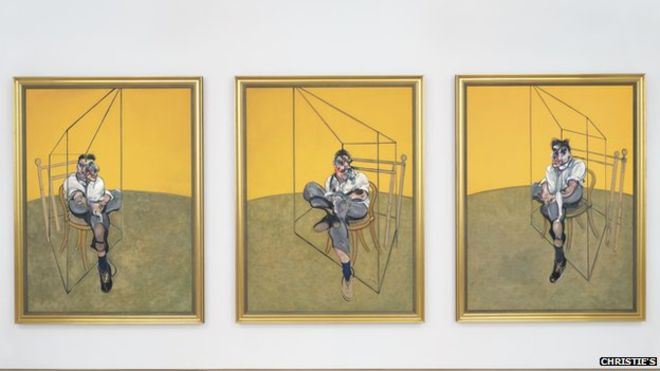
A number of art critics have said that the price paid for Three Studies of Lucian Freud (1969), by Francis Bacon, is money well spent.

While the anonymous new owner decides how to insure and where to hang the triptych, stretched householders may wonder how a purchase like this could ever be a good deal.

And should they decide to invest in art themselves – at a less spectacular level – then there are warnings that the value of such items can go down as well as up.

Crisis? What crisis?

The Bacon masterpiece became the most expensive artwork ever sold at auction when it went under the hammer after six minutes of frantic bidding.

Calculations by The Economist suggest that Van Gogh’s 1890 work Portrait du Docteur Gachet actually cost more at auction if inflation is taken into account. The $82.5m paid for that painting in 1990 is the equivalent of $148.6m at today’s prices, the magazine says.

Some people say it is vulgar to talk about art and money at the same time. Estelle Lovatt , Art critic

Meanwhile, in 2011, the Qatari royal family paid more than $250m for a Cezanne in a private sale, The Economist adds.

All the same, $142m is an eye-watering amount of money, even though there are three paintings in the set, and especially as we are only slowly emerging from a global financial crisis.

Pink Star
The Pink Star was sold for $83m at auction in Geneva

A total of £782m was spent during the Christie’s auction of post-war and contemporary art that night.

On the same day as the Bacon sale, a diamond known as the Pink Star sold for $83m (£52m, 62m euros) at auction in Geneva – the highest auction price for a gemstone.

“At the moment people wonder how come art is securing such funds,” says art critic Estelle Lovatt.

“When you consider interest rates at the banks at the moment, your money works much better and the result looks much prettier on the wall or on a plinth.

“It has been an incredible year [for art sales], especially given the financial situation.

“Some people say it is vulgar to talk about art and money at the same time – cash is the C-word in the art world. But it is a great investment.”

Or is it?

Top v bottom

Just a few hours after record-breaking sums were being bid in New York and Geneva, a watercolour work called Portrait of a Lady was sold for £238 at an auction in Edinburgh.

Another watercolour entitled Flower Arrangement went under the hammer for £275, and the top sale of the day was a mahogany bookcase that fetched £18,750.

Auctions such as this are taking place across the country most days of the week, buoyed in part by the popularity of daytime TV auction shows such as Antiques Roadshow and internet auction sites.

The Scream by Edvard Munch
The Scream by Edvard Munch could have been yours for £74m

Yet, it is a two-pace market, according to Richard Madley, a fellow of the National Association of Valuers and Auctioneers (NAVA).

“It is akin to the London housing market compared to the rest of the UK, where prices go up and up in the capital,” he says.

“A work by Bacon is like an eight-bedroom house in Belgravia, while the chest of drawers is the two-bedroom cottage in the North East which remains affordable,” he says.

While the global super-rich keep spending record-breaking amounts at the top end of the market, prices of domestic, lower-value antiques have tumbled, he says.

For example, last year, $119.9m (£74m) was paid for Edvard Munch’s The Scream, whereas in the last 10 years the typical price of a traditional dinner service or a Victorian wardrobe has halved.

The reason is that masterpieces will usually retain their appeal, while lower level furniture and art are at the mercy of fashion.

“Antiques are not cool. Young people in their 30s and 40s do not want what their parents hung on the wall; they do not want a big Victorian extending dining table; they want glass and chrome,” Mr Madley says.

Chinese lesson

Anyone considering taking the risk of investing could look for a lesson in the market for works from China and Japan, according to auctioneer Mr Madley.

Bidding for Japanese porcelain hit its height in the 1990s but prices have fallen since.

Yet, as disposable income rises in China, the new middle class and wealthy are buying back the heritage that left the country in decades past. Chinese ceramics, bronzes, jade and metalwork are proving particularly popular.

In one case, Mr Madley says, a Chinese pottery bowl that had a reserve price of £200 sold for £37,000. A lot such as this is known as a sleeper, which is awoken by frantic bidding.

Anyone thinking of buying at auction for the first time should ask for help before the bidding starts, Mr Madley suggests, and they do not need to worry that scratching their nose could be mistaken as a bid and cost them thousands of pounds.

“Auctioneers look for serious bidding signals, and bidders now are often given a piece of paper with their number on when they register,” he says.

Auction tips:

  • Visit an auction to watch before taking part
  • Look at the guide prices in the catalogue
  • Go to a preview to see what is being sold
  • Do not forget the extra cost of the buyer’s premium – the auctioneer’s fee
  • Have a look around on preview days, talk to the auctioneer, and pick up a catalogue
  • Look at the guide price. The minimum amount that the seller will accept is confidential, but cannot exceed the lower estimate
  • Watch an auction first, before taking part
  • Remember the extra charge, known as a buyer’s premium. It can vary from 5% to 25% of the bid price. Ask about the cost beforehand

The most important advice when buying art, according to Mr Madley, was a tip he was given as a young man by one of his bosses.

“Buy art with your eyes and not your ears. It must give you pleasure to look at it, don’t buy it because someone tells you it will be worth more in a few years’ time,” he says.

Still, ask anyone who was at the auction of the Bacon triptych last week, and they will say that as the bidding hit stratospheric levels, they could believe neither their eyes nor their ears.