Can spending millions on art ever be a good investment?

_70396846_bacon-triptych


Consider the idea of spending $142m (£89m, 106m euros) on a work of art and then being told you have bagged a bargain.

A number of art critics have said that the price paid for Three Studies of Lucian Freud (1969), by Francis Bacon, is money well spent.

While the anonymous new owner decides how to insure and where to hang the triptych, stretched householders may wonder how a purchase like this could ever be a good deal.

And should they decide to invest in art themselves – at a less spectacular level – then there are warnings that the value of such items can go down as well as up.

Crisis? What crisis?

The Bacon masterpiece became the most expensive artwork ever sold at auction when it went under the hammer after six minutes of frantic bidding.

Calculations by The Economist suggest that Van Gogh’s 1890 work Portrait du Docteur Gachet actually cost more at auction if inflation is taken into account. The $82.5m paid for that painting in 1990 is the equivalent of $148.6m at today’s prices, the magazine says.

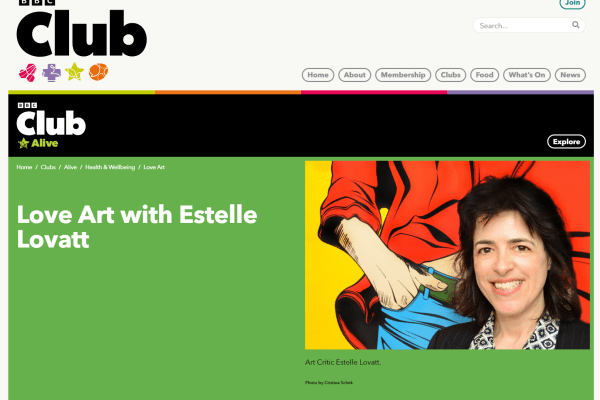
Some people say it is vulgar to talk about art and money at the same time. Estelle Lovatt , Art critic

Meanwhile, in 2011, the Qatari royal family paid more than $250m for a Cezanne in a private sale, The Economist adds.

All the same, $142m is an eye-watering amount of money, even though there are three paintings in the set, and especially as we are only slowly emerging from a global financial crisis.

Pink Star
The Pink Star was sold for $83m at auction in Geneva

A total of £782m was spent during the Christie’s auction of post-war and contemporary art that night.

On the same day as the Bacon sale, a diamond known as the Pink Star sold for $83m (£52m, 62m euros) at auction in Geneva – the highest auction price for a gemstone.

“At the moment people wonder how come art is securing such funds,” says art critic Estelle Lovatt.

“When you consider interest rates at the banks at the moment, your money works much better and the result looks much prettier on the wall or on a plinth.

“It has been an incredible year [for art sales], especially given the financial situation.

“Some people say it is vulgar to talk about art and money at the same time – cash is the C-word in the art world. But it is a great investment.”

Or is it?

Top v bottom

Just a few hours after record-breaking sums were being bid in New York and Geneva, a watercolour work called Portrait of a Lady was sold for £238 at an auction in Edinburgh.

Another watercolour entitled Flower Arrangement went under the hammer for £275, and the top sale of the day was a mahogany bookcase that fetched £18,750.

Auctions such as this are taking place across the country most days of the week, buoyed in part by the popularity of daytime TV auction shows such as Antiques Roadshow and internet auction sites.

The Scream by Edvard Munch
The Scream by Edvard Munch could have been yours for £74m

Yet, it is a two-pace market, according to Richard Madley, a fellow of the National Association of Valuers and Auctioneers (NAVA).

“It is akin to the London housing market compared to the rest of the UK, where prices go up and up in the capital,” he says.

“A work by Bacon is like an eight-bedroom house in Belgravia, while the chest of drawers is the two-bedroom cottage in the North East which remains affordable,” he says.

While the global super-rich keep spending record-breaking amounts at the top end of the market, prices of domestic, lower-value antiques have tumbled, he says.

For example, last year, $119.9m (£74m) was paid for Edvard Munch’s The Scream, whereas in the last 10 years the typical price of a traditional dinner service or a Victorian wardrobe has halved.

The reason is that masterpieces will usually retain their appeal, while lower level furniture and art are at the mercy of fashion.

“Antiques are not cool. Young people in their 30s and 40s do not want what their parents hung on the wall; they do not want a big Victorian extending dining table; they want glass and chrome,” Mr Madley says.

Chinese lesson

Anyone considering taking the risk of investing could look for a lesson in the market for works from China and Japan, according to auctioneer Mr Madley.

Bidding for Japanese porcelain hit its height in the 1990s but prices have fallen since.

Yet, as disposable income rises in China, the new middle class and wealthy are buying back the heritage that left the country in decades past. Chinese ceramics, bronzes, jade and metalwork are proving particularly popular.

In one case, Mr Madley says, a Chinese pottery bowl that had a reserve price of £200 sold for £37,000. A lot such as this is known as a sleeper, which is awoken by frantic bidding.

Anyone thinking of buying at auction for the first time should ask for help before the bidding starts, Mr Madley suggests, and they do not need to worry that scratching their nose could be mistaken as a bid and cost them thousands of pounds.

“Auctioneers look for serious bidding signals, and bidders now are often given a piece of paper with their number on when they register,” he says.

Auction tips:

  • Visit an auction to watch before taking part
  • Look at the guide prices in the catalogue
  • Go to a preview to see what is being sold
  • Do not forget the extra cost of the buyer’s premium – the auctioneer’s fee
  • Have a look around on preview days, talk to the auctioneer, and pick up a catalogue
  • Look at the guide price. The minimum amount that the seller will accept is confidential, but cannot exceed the lower estimate
  • Watch an auction first, before taking part
  • Remember the extra charge, known as a buyer’s premium. It can vary from 5% to 25% of the bid price. Ask about the cost beforehand

The most important advice when buying art, according to Mr Madley, was a tip he was given as a young man by one of his bosses.

“Buy art with your eyes and not your ears. It must give you pleasure to look at it, don’t buy it because someone tells you it will be worth more in a few years’ time,” he says.

Still, ask anyone who was at the auction of the Bacon triptych last week, and they will say that as the bidding hit stratospheric levels, they could believe neither their eyes nor their ears.

‘Go Figurative’ : Going Back To Figurative Art via Barack Obama

Since the 1990s, the phrase Conceptual Art has been unfairly manipulated to become an all-encompassing term, generating derision, which some erroneously apply to the Turner Prize, and other anti-figurative art.

As change comes politically, so it follows artistically with art imitating politics, reflecting its time.  And so it was, that under former-President George W. Bush art moved towards temporary sculpture, with artists remembering 9/11 as a ‘sculptural’ event based around two Giacometti-tall Judd-shiny minimal ‘sculptures’, razed to the ground.  Demolished as a Happening art-from.  Now with President Obama in charge, figurative artist Shepard Fairey was selected to paint Barack’s official Presidential portrait.  Deem it au courant for artists to investigate the ‘self’, promoting the figurative back into art, back into vogue.

Putting the ‘F’ word, figurative, into ‘Neo-Figurativism’, Go Figurative – a new web site gallery championed by co-founders and Directors Sally Perry and Janine Collins – respects the value and importance of reality-based fine art.  With creative ability, aesthetic value and sound artistic judgement, Go Figuratives’s Figurescapists depict life, retaining strong references to the real world and the human figure understanding what Picasso projected, when he said, “There is no abstract art.  You must always start with something figurative.”

As our visual appetite demands something that is visually easier to understand, Go Figurative believes traditional artist’s skills, which have been lost amid cries of ‘my child could do that!’ are reworked and brought up-to-date by ‘Neo-Figurativists’.

Working from reality and object sources referencing the real world, creative rationale is being brought back to contemporary art.  Reinforced by representational masters from the likes of Giacometti, Bacon, Freud and Hirst,  who all appreciate strong figurative references (marked since Egyptian idealization through Classical sculpture, the Realism of Courbet and Manet, through to contemporaneous modern art today) in fine art, as aesthetically satisfying.

Principally, the philosophical question is not whether a work of art is, indeed, a work of art, but, does it need to be aesthetically pleasing? Well, yes, it does.  If art does not aim at having aesthetic value, what then, will set it apart from non-art?  Making the ghost-of-Rubens proclaim of us again, “This Island seems worthy the consideration of a man of taste…by the incredible quantity of excellent pictures and statues.”

Ivan Massow (one-time Chairman of the Institute of Contemporary Arts) and Kim Howells (once Culture Minister who denounced the Turner Prize as “cold, mechanical, Conceptual bullshit”), think that which is artistically deficient, posing as Conceptualism, appalling.  Even the banknote-rich culture-poor agree these vacuous non-aesthetic DIY efforts fall apart, on many levels.  It is only saved from degeneration, with the talent and skill that is Martin Creed, Rachel Whitread, Simon Patterson, Simon Starling, Bethan Huws, Douglas Gordon and Liam Gillick.  Even Tracey Emin’s ‘My Bed’ is effectively ingenious.

Don’t misunderstand; there is some wonderful, breathtaking, eye-popping Conceptualism.  But it’s dated 1960/70s. When it was truly brilliant, it responded to political and social changes of the time, and of Dadaism, Surrealism, Suprematism, Abstract Expressionism and Fluxus.  It was awe-inspiring, humbling even.  Yet Conceptual artist Sol Lewitt said, “Ideas can be works of art; ideas need not be made physical as a work of art may be understood as a conductor from the artist’s mind to the viewer’s.  But it may never reach the viewer or it may never leave the artist’s mind”.  This is the problem with today’s unskilled ‘Bob-the-Builder’ artist, refilling Duchampian type urinals with copycat tins of Manzoni-faeces. It’s been done before, only better.

A difficult symptom of the mentality of the amateur Conceptual artist is his disproportionate concern with manifestos and unintelligent commentary, absolutely necessary in explaining his political aims and methods.  All hype, this badly-made tat – unfortunately posing as Conceptual art – gives art a bad name. With no aesthetic value, its best described as rubbish-tip utility ware.  A craze mercifully not lasting its anti-establishment anti-consumerist spirit longer than Warhol’s prescribed fifteen minutes.

Wave goodbye to the shocking ‘wannabe’, devoid of originality and ignorant of any creative craft that fine art labour alone brings with competence.  The second-rate artist fraud recognised by the way he despises the delicate tools and beautiful material great artists always delight in handling.  So he fails to draw on them.

As we see the beginning of the end of this quick slick Art Star, we are now buying art for sheer enjoyment and attraction to the art itself, created by the enormously talented.  Those now reinventing the objective that is present in figurative art, focus on the positives of the aesthetic; beauty and skill.  Cherry-picking from these Go Figurative’s perhaps lesser-known artists means you pick art that will increase in value as their career credentials and sales increase.  Furthermore, as the buyer, you are rewarded from living with the artwork.

And no better time than now in a recession, to buy art, and to consider the valuable lessons we’ve learnt from the 1930s Great Depression; when money is limited, people find distraction and calm in art.  As Wall Street opened the art world to new talent and ideas, artists started making worthy, affordable, intelligent, original and innovative art.

Also remember that after the UK’s last financial crash (late 1980s), the art world’s tightly guarded gates opened up to new talent, with fresh ways of thinking and seeing, which proved magnificent with the YBAs (Young British Artists).

The virtual internet gallery and community, Go Figurative, is the latest innovative on-line market place for talented sculptors, painters, photographers and print makers to form collectives with like minded professional artists, buyers, art critics and art historians.

The response from figurative artists has been significant. Whilst many have websites, most do not, and even those that do lack the traffic to be able to create significant awareness through them. Perry adds, “The artists I have spoken with have responded well to the idea of community based website focussed purely on figurative art. They like the idea of having a platform dedicated to the work which has references to reality at its core”.  The concept of the future is figurative. www.gofigurative.com

© Estelle Lovatt FRSA

Discerning Eye Exhibition | The Mall Galleries

Being a Discerning Eye 2013 selector was a privilege.  An honour.  Nerve-wracking too!

My individually invited artists are those whose work I liked – much before I even began to understand just how extremely good their art really was.  Then I chose my open submission artists.


Deborah Azzopardi
Isabel H Langtry
Ash Naghouni
Jonty Hurwitz
McAlpine Miller
Jane McAdam Freud
Kelvin Okafor
Paul Regan
Paul Coldwell
Charlotte Hodes

I treated curating my art exhibition like a garden.  Except my garden is more like a park – a theme-park, with a variety of art so diverse, that excellent artists of all ages, and technical abilities, working in all mediums, and styles, come together.  All my artists are making artworks that I like looking at.  They cheer me up.  And they exhilarate me.

My plot reaps of a visual harvest with different tastes and styles ensuring surprises.  I love what they do.

There is the mutual ‘getting-to-know-each other’ period that occurs when you first spot the artwork you’ll fall in love with.  It’s a bit like a first date; the bioengineering of it all is ever-so-personal.  Though do remember, that even though glazed in love, a picture of a beautiful girl that is badly painted is not as pictorially stunning as a picture of an ugly girl that is beautifully painted.  All in all, I’ve artworks so alive, I’m sure they breathe.

Like your favourite soft armchair, or carbohydrates for the eyes, this is how best to experience art.  Enjoy…

Photography by Cristina Schek.