
Starting from 4.45pm I’ll be talking about ‘The fun and irony in art’ at TEDxLondonBusinessSchool 2016.
Please follow this link to watch: http://livestream.com/TEDx/events/5288559


Starting from 4.45pm I’ll be talking about ‘The fun and irony in art’ at TEDxLondonBusinessSchool 2016.
Please follow this link to watch: http://livestream.com/TEDx/events/5288559

Delighted to announce that I’m one of the speakers at this year’s TEDxLondonBusinessSchool. Feel free to join me on April 29, 2016 at The Royal Geographical Society.
I’ll be talking about ‘The fun and irony in art’
‘As a freelance art critic for the BBC and Sky News who is also trained as a fine artist, Estelle Lovatt is well placed to offer her expert opinion on the theory, practice and intention behind great artworks. Estelle believes art is a universal language that best communicates human emotion as it breaks down barriers regardless of idiom, race, age, culture, gender, religion, country or ethnicity. In her illuminating talk she opens your eyes to the hard-to-fathom masterpieces, explaining how best to appreciate different art styles at work and understand the artist’s original intentions, allowing you to discover the hidden critic in you.’
See all the speakers announced here. More info & tickets. 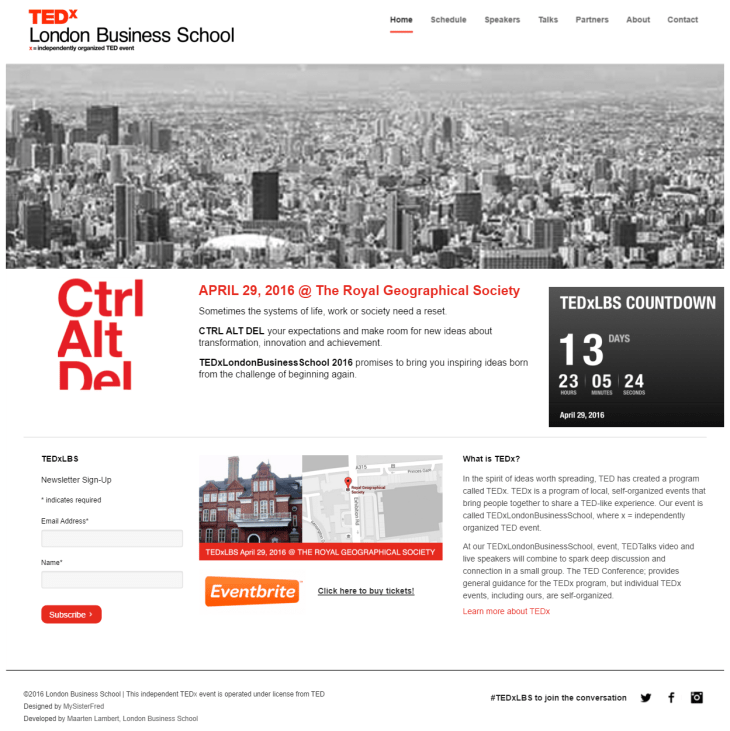

All the nominees for this year’s art prize, which will be decided tonight, have a social and political dimension.

An architecture collective with a strong social conscience could take home the Turner Prize tonight.
Assemble is a 14-strong group which blurs the line between art and architecture and is the first design studio ever to be nominated
They worked with the local community in Granby in Toxteth, Liverpool, to transform a number of rundown houses in an area which has seen huge deprivation since the 1981 Toxteth Riots.
Since being nominated they have also set up a workshop which makes products used in the renovations and these can now be bought by the public with the money being ploughed back into the project.
Matt Leung from Assemble told Sky News no one was more surprised by the nomination than they were.
“It’s the largest visual art prize in the UK and we didn’t really understand what was happening.
“It was quite bewildering but once we got the context of it – in the context of useful art and what that means – we used it as an opportunity to further the project, to set up Granby workshop as a social enterprise.”
Turner has the power to transform careers even with a nomination.
Damien Hirst, Steve McQueen and Grayson Perry are all winners – Tracey Emin was only nominated yet this was enough to cement her place in the history books.
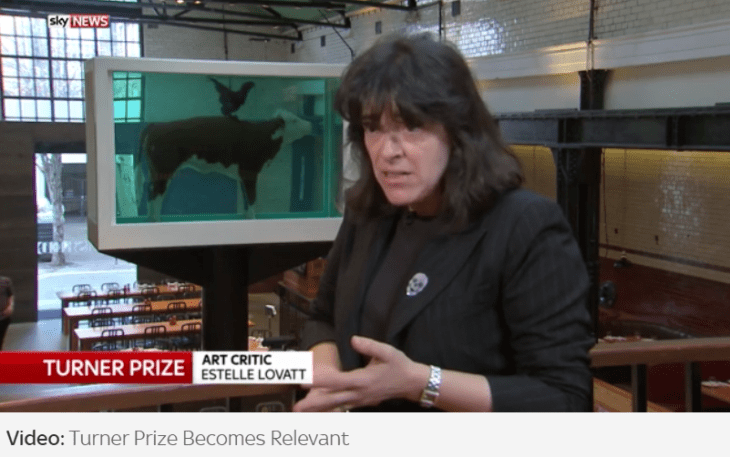
Art critic Estelle Lovatt says the prize is more relevant than ever this time round, with all the nominees having a social and political dimension to them.
“This year it’s extra special because the Turner Prize has its finger on the pulse of the nation,” she said.
“We’re really concerned this year about refugees, about people not being able to pay their bills – and this year we’ve actually got people bringing the community together through art.”
This year marks the first time the Turner exhibition has come to Scotland.
The prize will be presented in Glasgow, which has had 12 nominees and six winners in the past.
The other three nominees are Bonnie Camplin, Janice Kerbel and Nicole Wermers.

The Turner Prize 2015 has been awarded to the collective Assemble for their work Granby Four Streets that helped regenerate part of the Toxteth estate in Liverpool.
Sonic Youth singer Kim Gordon presented the award to members of the 16 member collective of artists, architects and designers, all aged under 30.
The London-based group’s work was commended for working across fields of art, design and architecture to create projects in tandem with communities in Liverpool who use and inhabit them.
Their spaces were praised by the community for promoting direct action and bringing art into everyday living.
Assemble collective artist Lewis Jones said winning the Turner Prize was “surreal”.

Assemble have also worked on a playground in Dalmarnock in the east end of Glasgow, a child-led space for children to play in a “free and unencumbered way”, Jones said.
“I hope that this award and the nomination before it helps give recognition and value to different ways of creating places in our cities and around our homes,” he added.
Art critic Estelle Lovatt said that having Assemble as one of the nominees made this year’s Turner Prize different.
“Not since the Renaissance has art had such an input on the community,” she said, adding: “Leonardo da Vinci would have loved it.”

Assemble snatched the £25,000 prize from three other nominees: Bonnie Camplin, Janice Kerbel and Nicole Wermers.
Camplin was nominated for The Military Industrial Complex, South London Gallery – a study room of books and videos discussing conspiracy theories and unexplained incidences to explore “consensus reality”.
Kerbel was nominated for her operatic work Doug which narrates a series of hapless accidents that befall a fictional character using audio recordings, performance and printed matter.
And Wermers was nominated for her exhibition Infrastruktur, Herald Street, London, an installation of fur coats sewn into the back of chairs exploring art and design in consumer culture.

Assemble, a collective of 18 young architects and artists, has won Britain’s most prestigious award for art. Their scheme to regenerate derelict houses in Liverpool has been described as transcending traditional ideas about art.
On show in Glasgow is a replica of their Granby workshop, showing products used in the Liverpool renovations, which are also available online.
For $12 you can own an original tile made by a Turner Prize winner, which is pretty cheap considering this prize can transform careers, turning unknown artists into multimillionaires.
One former winner, Damien Hirst, is now the world’s richest living artist.
Al Jazeera’s Charlie Angela explains.

The competition between the British painters John Constable and William Turner has gone down in history as one of the greatest-ever artistic rivalries.
 Estelle Lovatt